Can a Government Employee Be Fired? The Truth About 'Permanent' Government Jobs
By: Search Sarkari Naukri Team · Published: · Updated: · 3 min read
Quick summary
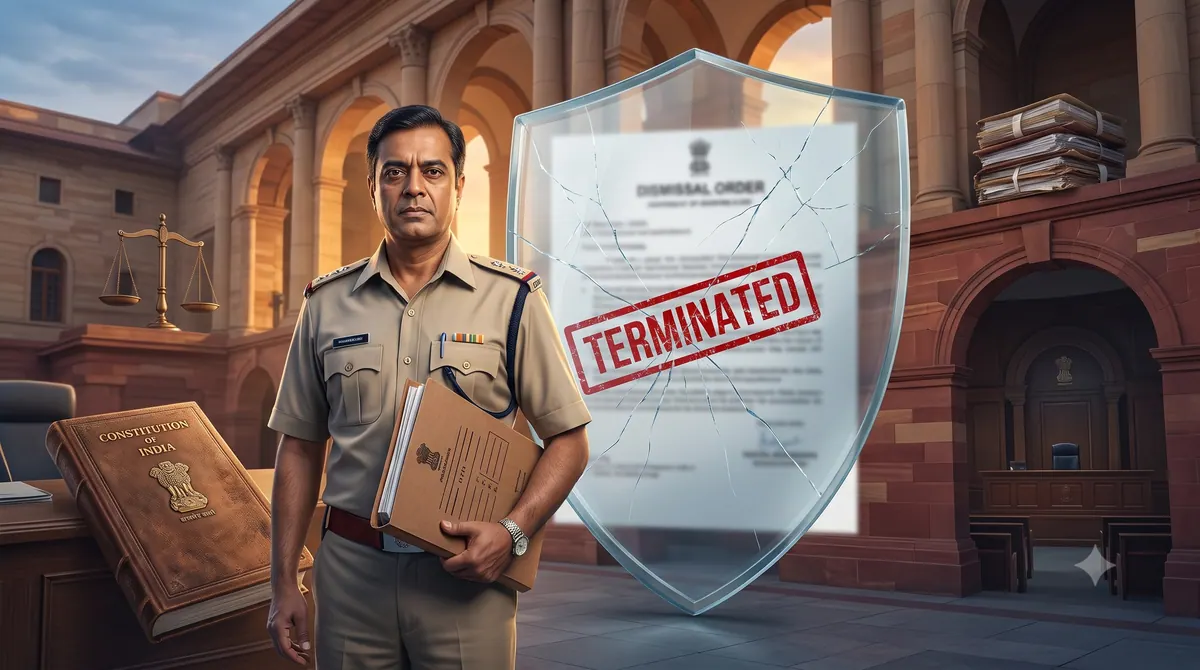
Many people believe that once you get a government job, you're untouchable. But is that really true? Here's what the law actually says about suspension, dismissal, and why a government job isn't a lifetime guarantee.
- Primary topic
- Government Jobs
- Category
- Career Guide
- Reading time
- 3 minutes
- Last reviewed
- 2026-08-20
"Government job mil gayi toh life set."
It's one of the most common beliefs in India. Ask almost anyone why they want a government job, and "job security" will be one of the first answers.
But does that mean a government employee can never be fired?
Not exactly.
The truth is that government employees enjoy stronger legal protection than most private-sector employees—but they can still lose their jobs under certain circumstances.
Let's understand how.
Government Jobs Are Protected, Not Untouchable
Government employees are protected by service rules and constitutional provisions. These rules ensure that employees cannot be removed unfairly or because of someone's personal opinion.
This protection exists to prevent misuse of power and to ensure fair treatment.
However, protection does not mean immunity.
Can a Government Employee Be Fired?
Yes.
A government employee can be dismissed, removed, or compulsorily retired if they are found guilty of serious misconduct or violate service rules.
Some common reasons include:
- Corruption or accepting bribes
- Fraud or financial misconduct
- Forging official documents
- Serious indiscipline
- Criminal conviction
- Repeated absence without permission
In such cases, disciplinary action can lead to dismissal from service.
What Is Article 311?
One reason government jobs are considered secure is Article 311 of the Indian Constitution.
This provision protects most civil servants from being removed without following a proper legal process.
Before dismissal, employees are generally given an opportunity to explain their side, and authorities must follow disciplinary procedures instead of taking arbitrary action.
Suspension vs Dismissal
Many people confuse these two terms.
Suspension means the employee is temporarily kept away from work while an investigation is conducted.
Dismissal means the employee permanently loses the job after disciplinary proceedings are completed.
Being suspended does not automatically mean someone has been found guilty.
What About Probation?
Employees who are still on probation do not enjoy the same level of protection as permanent employees.
If their performance is unsatisfactory or they fail to meet required standards, their services may be terminated more easily, following the applicable rules.
Why This Matters for Aspirants
Many candidates prepare for government jobs because of stability.
That's completely understandable—but stability should never be confused with guaranteed employment.
Government employees are expected to maintain discipline, honesty, and professional conduct throughout their careers.
The system protects sincere employees, but it also has mechanisms to remove those who seriously violate the rules.
Final Thoughts
So, can a government employee be fired?
Yes—but not without due process in most cases.
Government jobs offer excellent security because the law protects employees from arbitrary dismissal. At the same time, corruption, misconduct, criminal offences, or serious violations of service rules can still lead to removal from service.
The biggest myth isn't that government jobs are secure.
The biggest myth is believing they're impossible to lose.
Frequently asked questions
But does that mean a government employee can never be fired?
Not exactly. The truth is that government employees enjoy stronger legal protection than most private-sector employees—but they can still lose their jobs under certain circumstances. Let's understand how.
Can a Government Employee Be Fired?
Yes. A government employee can be dismissed, removed, or compulsorily retired if they are found guilty of serious misconduct or violate service rules. Some common reasons include: Corruption or accepting bribesFraud or financial misconductForging official documentsSerious indisciplineCriminal convictionRepeated absence without permission In such cases, disciplinary action can lead to dismissal from service.
What Is Article 311?
One reason government jobs are considered secure is Article 311 of the Indian Constitution. This provision protects most civil servants from being removed without following a proper legal process. Before dismissal, employees are generally given an opportunity to explain their side, and authorities must follow disciplinary procedures instead of taking arbitrary action.
What About Probation?
Employees who are still on probation do not enjoy the same level of protection as permanent employees. If their performance is unsatisfactory or they fail to meet required standards, their services may be terminated more easily, following the applicable rules.
So, can a government employee be fired?
Yes—but not without due process in most cases. Government jobs offer excellent security because the law protects employees from arbitrary dismissal. At the same time, corruption, misconduct, criminal offences, or serious violations of service rules can still lead to removal from service. The biggest myth isn't that government jobs are secure. The biggest myth is believing they're impossible to lose.
Continue your preparation
Topics covered
About the author
Search Sarkari Naukri Team reviews government-job information, competitive-exam guidance and public-system explainers. Verify time-sensitive requirements on the relevant official authority's website.
Related articles
- What Happens If Nobody Applies for a Government Job? The Surprising Answer — Career Guide
- Top 10 Highest-Paying Government Jobs in India in 2026 — Career Guide
- 10th and 12th Pass Government Jobs in India 2026: Best Career Options, Salary & How to Apply — Career Guide
- UPSC Civil Services Examination 2026: Complete Beginner's Guide to IAS, IPS & IFS — Career Guide
- What Happens When Your Dream Exam Is Not Your Best Opportunity? — Exam Culture & Society
- Is a Government Job Still the Best “Safe” Career Choice? — Careers & Society