A Day in the Life of an IAS Officer: What Really Happens Behind the Desk?
By: Search Sarkari Naukri Team · Published: · Updated: · 3 min read
Quick summary
Have you ever wondered what an IAS Officer actually does all day? Is it just meetings and files, or is there much more behind one of India's most prestigious careers? Let's follow an IAS officer through a typical day.
- Primary topic
- IAS Officer
- Category
- Government Careers
- Reading time
- 3 minutes
- Last reviewed
- 2026-08-20
Ask a group of people what an IAS Officer does, and you'll probably hear the same answers.
"They attend meetings."
"They sign files."
"They sit in air-conditioned offices."
It sounds simple enough.
But here's the reality.
An IAS Officer's day is one of the most unpredictable workdays in India.
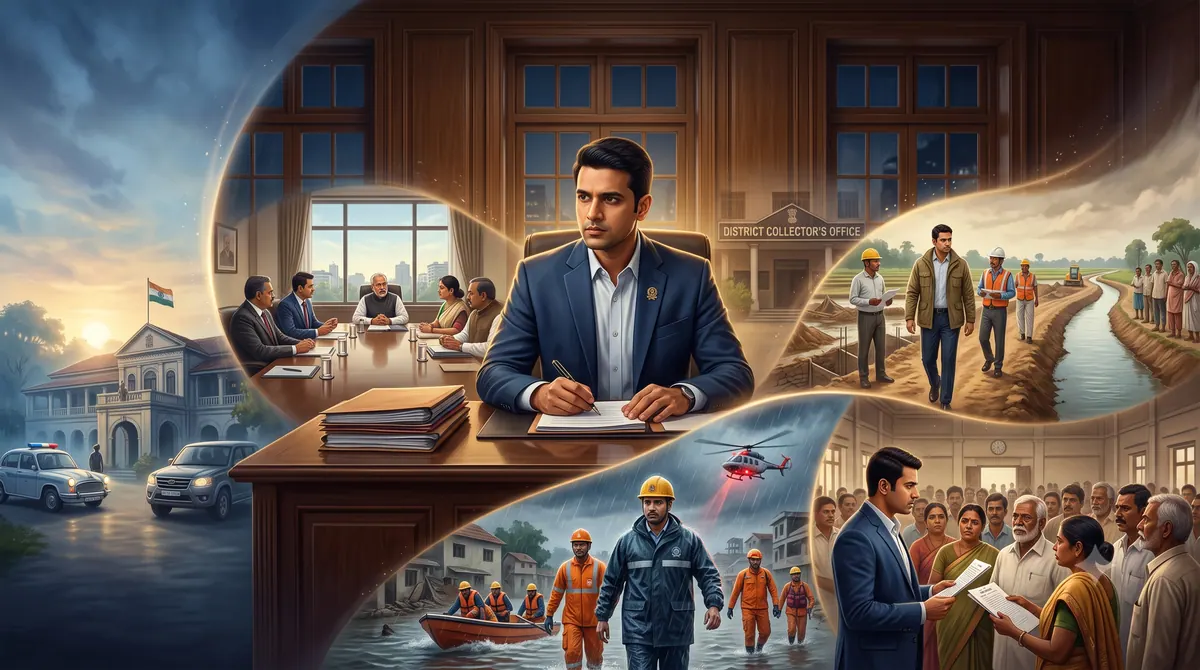
Some mornings begin with reviewing development projects. Others begin with an emergency phone call at 5 a.m. because heavy rainfall has flooded villages. There is no fixed routine, and that's exactly what makes the job both exciting and incredibly demanding.
Imagine it's 7:30 in the morning.
Before most offices even open, the officer is already scanning reports that arrived overnight. Weather updates, law and order reports, health department summaries, and pending administrative issues all demand attention before the first meeting of the day.
By 9 a.m., the office starts filling up.
Department heads, engineers, education officers, police officials, and citizens with grievances begin arriving. One meeting discusses road construction delays. Another focuses on improving school attendance. The next is about water supply in nearby villages.
Each issue affects real people.
Each decision can change someone's day—or even someone's future.
Contrary to what many believe, an IAS Officer rarely works alone. The job is about coordinating dozens of departments, balancing limited resources, and ensuring that government schemes actually reach the people they're meant to help.
And that's only half the story.
By afternoon, the office work often gives way to field visits.
An IAS Officer may inspect a government hospital, review the progress of a highway project, visit a village facing water shortages, or meet families affected by a natural disaster. These visits aren't ceremonial. They help officers understand problems on the ground instead of relying only on reports sitting on a desk.
Sometimes the schedule changes without warning.
A bridge collapses.
A major accident occurs.
Heavy rains trigger flooding.
A public protest begins.
Within minutes, carefully planned meetings are cancelled, and the officer is coordinating with police, disaster response teams, health officials, and local administration. Decisions need to be taken quickly, often with incomplete information and under immense public scrutiny.
This ability to stay calm under pressure is one of the defining qualities of successful civil servants.
By evening, most people assume the workday is over.
It usually isn't.
Files waiting for approval still need attention. Budget proposals must be reviewed. Reports have to be submitted to senior authorities. Tomorrow's meetings need preparation.
Even after leaving the office, many officers remain reachable because emergencies don't follow office hours.
This is the side of the job that social media rarely shows.
People often see official vehicles, ceremonial events, or photographs from public functions. They don't see the late-night reviews, difficult decisions, or the pressure of balancing public expectations with government rules.
Does the job come with prestige?
Absolutely.
Does it offer influence and responsibility?
Without question.
But those privileges come with accountability that few careers demand.
Every major decision is documented.
Every action can be questioned.
Every mistake can affect thousands of people.
That's why becoming an IAS Officer isn't just about clearing one of the toughest examinations in the country. It's about preparing for a career where leadership, integrity, patience, and decision-making matter every single day.
For UPSC aspirants, understanding the reality of the profession is just as important as preparing for the examination itself. The dream shouldn't be built only around power or status. It should be built around the opportunity to solve problems, improve public services, and make a meaningful difference in people's lives.
Because behind every government file is a real person waiting for a solution.
And behind every IAS Officer is a responsibility that never truly ends.
Frequently asked questions
Does the job come with prestige?
Absolutely.
Does it offer influence and responsibility?
Without question. But those privileges come with accountability that few careers demand. Every major decision is documented. Every action can be questioned. Every mistake can affect thousands of people. That's why becoming an IAS Officer isn't just about clearing one of the toughest examinations in the country. It's about preparing for a career where leadership, integrity, patience, and decision-making matter every s
Continue your preparation
Topics covered
About the author
Search Sarkari Naukri Team reviews government-job information, competitive-exam guidance and public-system explainers. Verify time-sensitive requirements on the relevant official authority's website.
Related articles
- From Probation to Promotion: The Career Growth of an Income Tax Inspector — Government Careers
- What Happens When Your Dream Exam Is Not Your Best Opportunity? — Exam Culture & Society
- Is a Government Job Still the Best “Safe” Career Choice? — Careers & Society
- What Is a Gazetted Officer? And Why Their Signature Matters — Government Policies & Explained
- Why Do Aspirants Feel Guilty for Having a Backup Plan? — Exam Culture & Society
- Title: Why Does Preparing for a Government Job Sometimes Feel Like a Full-Time Job? — Exam Culture & Society