Why Was New Delhi Chosen as India's Capital? The History Behind the Decision
By: Search Sarkari Naukri Team · Published: · Updated: · 4 min read
Quick summary
Why is New Delhi the capital of India instead of Mumbai, Kolkata, or another major city? Discover the fascinating history, political reasons, and strategic factors behind one of India's most important decisions.
- Primary topic
- New Delhi history
- Category
- Government History
- Reading time
- 4 minutes
- Last reviewed
- 2026-08-20
Why Was New Delhi Chosen as India's Capital? The History Behind the Decision
Today, New Delhi is recognized as the political and administrative heart of India. It is home to the President of India, the Prime Minister's Office, Parliament, the Supreme Court, and most Central Government ministries. Every major national decision is connected to this city in some way.
But have you ever wondered why New Delhi became the capital of India?
After all, India has many large and influential cities like Mumbai, Kolkata, Chennai, Bengaluru, and Hyderabad. Why was New Delhi chosen over them?
The answer lies in history, geography, politics, and careful planning that began more than a century ago.
India's Capital Before New Delhi
Before New Delhi became the capital, Kolkata (then Calcutta) served as the capital of British India from 1772 to 1911.
During this period, Calcutta was one of the most important cities in the British Empire. It was a major trading center, administrative headquarters, and commercial hub for the East India Company and later the British Crown.
Many important government offices were located there, making it the center of British administration in India.
However, as British rule expanded across the subcontinent, several challenges emerged.
Why Did the British Decide to Shift the Capital?
By the early 20th century, the British Government believed that Calcutta was no longer the ideal location for governing the entire country.
Several reasons influenced their decision.
A More Central Location
Calcutta is located in eastern India.
As British administration expanded across the country, governing distant northern, western, and central regions from Calcutta became increasingly difficult.
Delhi was considered geographically more central and offered better administrative connectivity to many important regions.
Historical Importance
Delhi had been the seat of power for several major Indian dynasties long before British rule.
The city served as the capital of the Delhi Sultanate and later the Mughal Empire for centuries.
Because of this rich political history, Delhi already symbolized authority and governance.
The British believed establishing their capital there would reinforce their administrative presence.
Political Considerations
At the beginning of the 20th century, Calcutta had become a major center of nationalist movements.
Political protests and revolutionary activities were increasing in Bengal.
Moving the capital was also seen as a way to reduce the concentration of political influence in Calcutta while strengthening British administrative control elsewhere.
The Historic Announcement in 1911
A major turning point came during the Delhi Durbar of 1911.
King George V announced that the capital of British India would be shifted from Calcutta to Delhi.
The announcement surprised many people because it represented one of the biggest administrative changes in British India.
Construction of the new capital began shortly afterward.
Building a New Capital
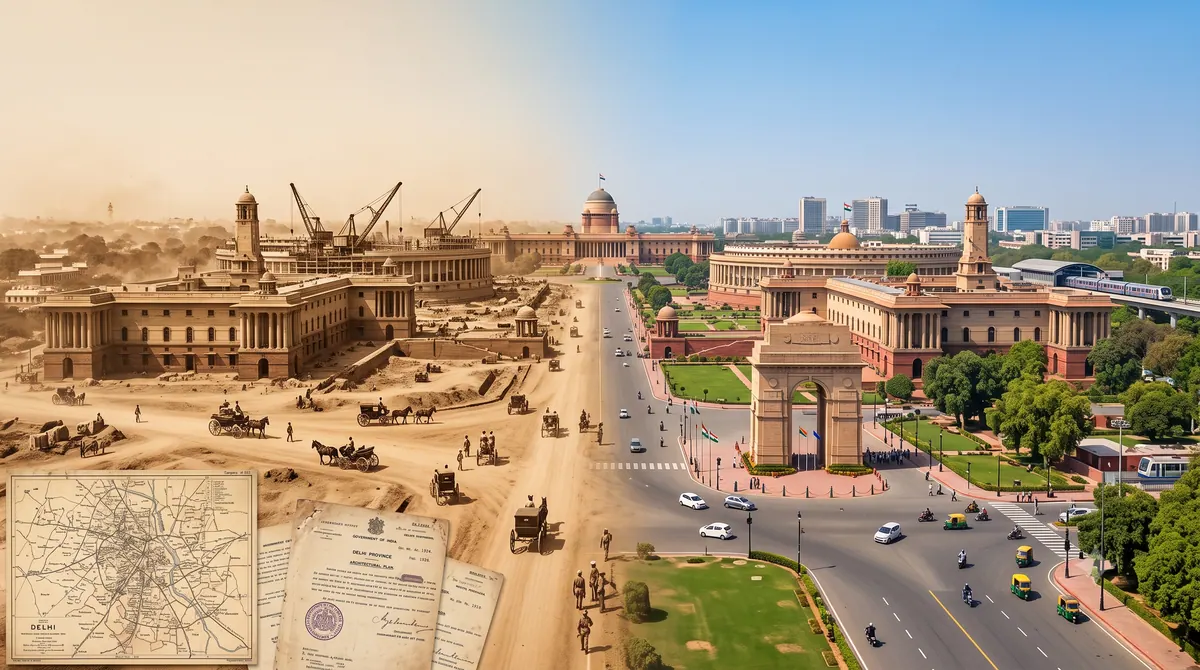
Instead of using the existing city of Delhi as it was, the British planned an entirely new administrative city adjacent to Old Delhi.
This new city became New Delhi.
It was carefully designed with:
- Wide roads
- Government office complexes
- Administrative buildings
- Residential areas
- Public parks
- Planned infrastructure
The objective was to create a modern capital that reflected administrative efficiency and imperial authority.
Who Designed New Delhi?
The planning and architectural design of New Delhi were led by renowned British architects Sir Edwin Lutyens and Sir Herbert Baker.
Their vision combined classical European architectural styles with several Indian design elements.
Many iconic buildings constructed during this period continue to serve important government functions today.
These include:
- Rashtrapati Bhavan (formerly the Viceroy's House)
- Parliament House
- North Block
- South Block
- India Gate
- Central Vista
These structures remain some of India's most recognizable landmarks.
When Did New Delhi Officially Become the Capital?
Although the decision to shift the capital was announced in 1911, constructing an entirely new administrative city required many years.
New Delhi was officially inaugurated in 1931, becoming the administrative capital of British India.
Government offices gradually shifted from Calcutta to the newly built capital.
Why Did Independent India Keep New Delhi as Its Capital?
When India became independent in 1947, the newly formed Government of India chose to retain New Delhi as the national capital.
There were several practical reasons for this decision.
The city already had:
- Parliament and legislative buildings
- Government ministries
- Administrative infrastructure
- Diplomatic missions
- Official residences
- Well-developed transportation networks
Instead of building a new capital from scratch, independent India continued developing New Delhi as the country's administrative center.
Why Is New Delhi Important Today?
Today, New Delhi serves as the headquarters of the Central Government.
Major institutions located here include:
- Parliament of India
- Rashtrapati Bhavan
- Prime Minister's Office
- Supreme Court of India
- Central Government Ministries
- Election Commission of India
- Union Public Service Commission (UPSC)
The city also hosts foreign embassies, international organizations, and important national events such as Republic Day celebrations.
Its role extends beyond politics, making it one of India's most influential cities.
Did Any Other Cities Have a Chance?
Cities like Mumbai, Kolkata, Chennai, and Bengaluru have all played significant roles in India's economic and cultural development.
However, when the capital was shifted in the early 20th century, Delhi offered a unique combination of historical significance, strategic location, and administrative potential.
After Independence, relocating the capital again would have required enormous financial resources and years of planning.
As a result, New Delhi continued as India's permanent national capital.
Frequently asked questions
But have you ever wondered why New Delhi became the capital of India?
After all, India has many large and influential cities like Mumbai, Kolkata, Chennai, Bengaluru, and Hyderabad. Why was New Delhi chosen over them? The answer lies in history, geography, politics, and careful planning that began more than a century ago.
Why Did the British Decide to Shift the Capital?
By the early 20th century, the British Government believed that Calcutta was no longer the ideal location for governing the entire country. Several reasons influenced their decision.
Who Designed New Delhi?
The planning and architectural design of New Delhi were led by renowned British architects Sir Edwin Lutyens and Sir Herbert Baker. Their vision combined classical European architectural styles with several Indian design elements. Many iconic buildings constructed during this period continue to serve important government functions today. These include: Rashtrapati Bhavan (formerly the Viceroy's House)Parliament House
When Did New Delhi Officially Become the Capital?
Although the decision to shift the capital was announced in 1911, constructing an entirely new administrative city required many years. New Delhi was officially inaugurated in 1931, becoming the administrative capital of British India. Government offices gradually shifted from Calcutta to the newly built capital.
Why Did Independent India Keep New Delhi as Its Capital?
When India became independent in 1947, the newly formed Government of India chose to retain New Delhi as the national capital. There were several practical reasons for this decision. The city already had: Parliament and legislative buildingsGovernment ministriesAdministrative infrastructureDiplomatic missionsOfficial residencesWell-developed transportation networks Instead of building a new capital from scratch, inde
Why Is New Delhi Important Today?
Today, New Delhi serves as the headquarters of the Central Government. Major institutions located here include: Parliament of IndiaRashtrapati BhavanPrime Minister's OfficeSupreme Court of IndiaCentral Government MinistriesElection Commission of IndiaUnion Public Service Commission (UPSC) The city also hosts foreign embassies, international organizations, and important national events such as Republic Day celebration
Did Any Other Cities Have a Chance?
Cities like Mumbai, Kolkata, Chennai, and Bengaluru have all played significant roles in India's economic and cultural development. However, when the capital was shifted in the early 20th century, Delhi offered a unique combination of historical significance, strategic location, and administrative potential. After Independence, relocating the capital again would have required enormous financial resources and years of
Continue your preparation
Topics covered
About the author
Search Sarkari Naukri Team reviews government-job information, competitive-exam guidance and public-system explainers. Verify time-sensitive requirements on the relevant official authority's website.
Related articles
- What Happens When Your Dream Exam Is Not Your Best Opportunity? — Exam Culture & Society
- Is a Government Job Still the Best “Safe” Career Choice? — Careers & Society
- What Is a Gazetted Officer? And Why Their Signature Matters — Government Policies & Explained
- Why Do Aspirants Feel Guilty for Having a Backup Plan? — Exam Culture & Society
- Title: Why Does Preparing for a Government Job Sometimes Feel Like a Full-Time Job? — Exam Culture & Society
- What Does “Job Security” Actually Mean Anymore? — Work & Society