Why Is Indian Currency Called the Rupee? The 2,000-Year-Old Story Behind ₹
By: Search Sarkari Naukri Team · Published: · Updated: · 4 min read
Quick summary
The word “rupee” isn't a modern invention. Its roots go back centuries, while the symbol ₹ is comparatively new. Here's how India's currency got its name and how the rupee evolved into what we use today.
- Primary topic
- Indian rupee
- Category
- India Explained
- Reading time
- 4 minutes
- Last reviewed
- 2026-09-08
Why Do We Call It the Rupee?
The word “rupee” feels so ordinary that most people never stop to question it.
We say:
₹100.
₹500.
₹2,000.
Rupees.
But the name has been around for centuries.
And its story goes much further back than modern India.
The Word Comes From “Rūpya”
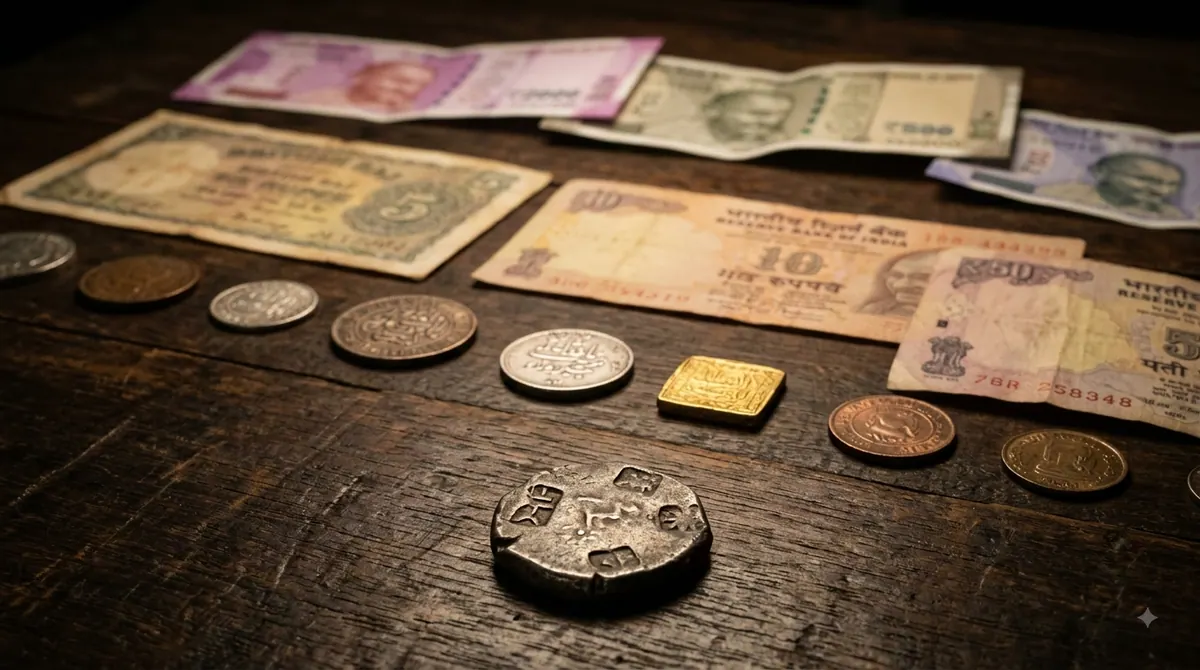
The word rupee is generally traced to the Sanskrit word rūpya, associated with silver and something fashioned or stamped.
The term eventually developed into words used for monetary units in different parts of the Indian subcontinent.
So when you say “rupee,” you're using a word with a very old linguistic history.
The Silver Connection
The history of the rupee is closely connected to silver.
One of the most important developments came during the reign of Sher Shah Suri in the 16th century.
Sher Shah introduced a standard silver coin commonly associated with the term rupiya, weighing around 178 grains.
That coin became an important model for later monetary systems in the subcontinent.
Then the Mughals Got Involved
The monetary system continued to evolve under the Mughal Empire.
The silver rupee became an important standard coin.
Different rulers issued their own coinage, but the silver rupee became increasingly established as a major monetary unit.
This is one reason the word survived through huge political changes.
The British Didn't Invent the Rupee
Another misconception.
The rupee existed long before British rule.
The British East India Company later standardised and issued rupee coinage in its territories, and the monetary system evolved further under British administration.
But Britain didn't create the concept of the rupee from scratch.
It inherited and standardised an already established monetary tradition.
What Happened After Independence?
When India became independent in 1947, the rupee remained the country's currency.
The currency system continued evolving.
India eventually moved from the old anna-pice system to the decimal system.
India Went Decimal in 1957
This is one of those facts that sounds completely fake until you check it.
Before decimalisation, one rupee was divided into:
16 annas.
And each anna was further divided into smaller units.
India adopted decimal currency in 1957.
After that, the rupee was divided into 100 paise.
That's why we still say:
₹1 = 100 paise.
Where Did the ₹ Symbol Come From?
The modern ₹ symbol is much newer than the word “rupee.”
The symbol was officially adopted in 2010.
It was designed by D. Udaya Kumar, who won the competition conducted by the Government of India for a symbol for the Indian rupee.
The design combines elements of the Devanagari letter “र” and the Roman capital letter “R”.
That's why the symbol looks familiar in both an Indian and international typographic context.
Why Does the Symbol Have Two Horizontal Lines?
The design isn't random.
The two horizontal lines form part of the visual structure of the symbol and also resemble the top horizontal line characteristic of Devanagari writing.
The symbol was designed to visually connect the Indian rupee with both Indian linguistic identity and the Latin alphabet used internationally.
What About the ₹2,000 Note?
Here's another interesting piece of recent currency history.
India introduced the ₹2,000 banknote in 2016 following demonetisation.
The note became the highest-denomination banknote in circulation.
The Reserve Bank of India later announced its withdrawal from circulation as legal tender while allowing holders to exchange or deposit the notes under the specified process.
So even modern currency can have a surprisingly short life.
Why Doesn't India Just Call It “Indian Dollar” or Something Similar?
Because currencies aren't named according to a universal template.
The rupee is part of India's historical monetary identity.
And India isn't the only country to use the word.
The name rupee is also associated historically or currently with currencies in other South Asian countries.
The word travelled across the region because monetary systems were historically interconnected.
Money Is Basically History You Can Hold
That's probably the coolest part of the rupee's story.
A modern ₹100 note looks like an ordinary piece of paper.
But the word printed on it connects to centuries of monetary history.
The modern symbol was created only recently.
The decimal system is only a few decades old.
The paper currency system has changed repeatedly.
But the basic name survived through empires, colonial rule, independence and economic transformation.
Final Take
The rupee isn't some modern invention created after independence.
Its linguistic and monetary roots go back centuries, with the silver rupee becoming particularly important in the Indian subcontinent from the medieval period onward.
India's modern currency is the latest chapter in a very long story.
So the next time you type ₹500, you're using a symbol that's only about 16 years old—
for a currency whose name is centuries older.
Frequently asked questions
Why Do We Call It the Rupee?
The word “rupee” feels so ordinary that most people never stop to question it. We say: ₹100. ₹500. ₹2,000. Rupees. But the name has been around for centuries. And its story goes much further back than modern India.
What Happened After Independence?
When India became independent in 1947, the rupee remained the country's currency. The currency system continued evolving. India eventually moved from the old anna-pice system to the decimal system.
Where Did the ₹ Symbol Come From?
The modern ₹ symbol is much newer than the word “rupee.” The symbol was officially adopted in 2010. It was designed by D. Udaya Kumar, who won the competition conducted by the Government of India for a symbol for the Indian rupee. The design combines elements of the Devanagari letter “र” and the Roman capital letter “R”. That's why the symbol looks familiar in both an Indian and international typographic context.
Why Does the Symbol Have Two Horizontal Lines?
The design isn't random. The two horizontal lines form part of the visual structure of the symbol and also resemble the top horizontal line characteristic of Devanagari writing. The symbol was designed to visually connect the Indian rupee with both Indian linguistic identity and the Latin alphabet used internationally.
What About the ₹2,000 Note?
Here's another interesting piece of recent currency history. India introduced the ₹2,000 banknote in 2016 following demonetisation. The note became the highest-denomination banknote in circulation. The Reserve Bank of India later announced its withdrawal from circulation as legal tender while allowing holders to exchange or deposit the notes under the specified process. So even modern currency can have a surprisingly
Why Doesn't India Just Call It “Indian Dollar” or Something Similar?
Because currencies aren't named according to a universal template. The rupee is part of India's historical monetary identity. And India isn't the only country to use the word. The name rupee is also associated historically or currently with currencies in other South Asian countries. The word travelled across the region because monetary systems were historically interconnected.
Continue your preparation
Topics covered
About the author
Search Sarkari Naukri Team reviews government-job information, competitive-exam guidance and public-system explainers. Verify time-sensitive requirements on the relevant official authority's website.
Related articles
- Age Limit for Government Jobs 2026: Rules, Relaxation & How to Check — Government Job Guides
- Can Government Employees Start a YouTube Channel or Business? Rules Explained — Government Policies & Explained
- 10th and 12th Pass Government Jobs in India 2026: Best Career Options, Salary & How to Apply — Career Guide
- Bank Apprentice Jobs 2026: Graduate Apprentice Apply Guide — Government Job Guides
- Government Jobs Without Graduation 2026 – 10th & 12th Pass Jobs — Government Job Guides
- Group A, B, C & D Government Jobs Explained: Which One Is Right for You? — Career Guide