Why Does India Have Union Territories? States vs Union Territories Explained
By: Search Sarkari Naukri Team · Published: · Updated: · 5 min read
Quick summary
Why are some parts of India governed as Union Territories instead of full-fledged states? Understand the difference between states and Union Territories, why they exist, and how their administration works.
- Primary topic
- Union Territories of India
- Category
- Government Facts
- Reading time
- 5 minutes
- Last reviewed
- 2026-08-20
Why Does India Have Union Territories? States vs Union Territories Explained
India is divided into states and Union Territories, but have you ever wondered why both exist?
Most people understand what a state is. Maharashtra has its own government, Karnataka has its own government, and Rajasthan has its own government. But places such as Delhi, Chandigarh, Ladakh, and the Andaman and Nicobar Islands follow a different administrative structure.
These regions are known as Union Territories (UTs).
So, what exactly makes a Union Territory different from a state? Why were some regions placed under the direct administration of the Union Government? And why do some Union Territories have their own legislatures while others don't?
Let's break it down.
What Is a Union Territory?
A Union Territory is a region of India that is administered by the Union Government under the constitutional framework applicable to Union Territories.
Unlike states, which have their own constitutional position and elected governments with powers over various subjects, Union Territories generally have a closer administrative relationship with the Central Government.
The Constitution contains specific provisions dealing with the administration of Union Territories.
The President of India appoints an Administrator or Lieutenant Governor to administer a Union Territory, subject to the applicable constitutional and legal framework.
How Is a State Different from a Union Territory?
The biggest difference is the degree of autonomy.
A state has its own elected government headed by a Chief Minister and a Council of Ministers. State governments exercise legislative and executive powers over subjects assigned to them by the Constitution.
Union Territories are generally administered more directly by the Union Government.
However, there isn't one identical model for every UT.
Some Union Territories have legislatures and elected governments, while others are administered primarily through an Administrator or Lieutenant Governor.
Why Does India Need Union Territories?
There isn't one single reason why a region becomes a Union Territory.
Different UTs have different historical, geographical, strategic, and administrative backgrounds.
Some are geographically small.
Some are islands located far from mainland India.
Some have strategic importance.
Others have historical circumstances that led to a special administrative arrangement.
This flexibility allows the Union Government to administer regions whose circumstances may differ significantly from those of India's larger states.
How Many Union Territories Does India Have?
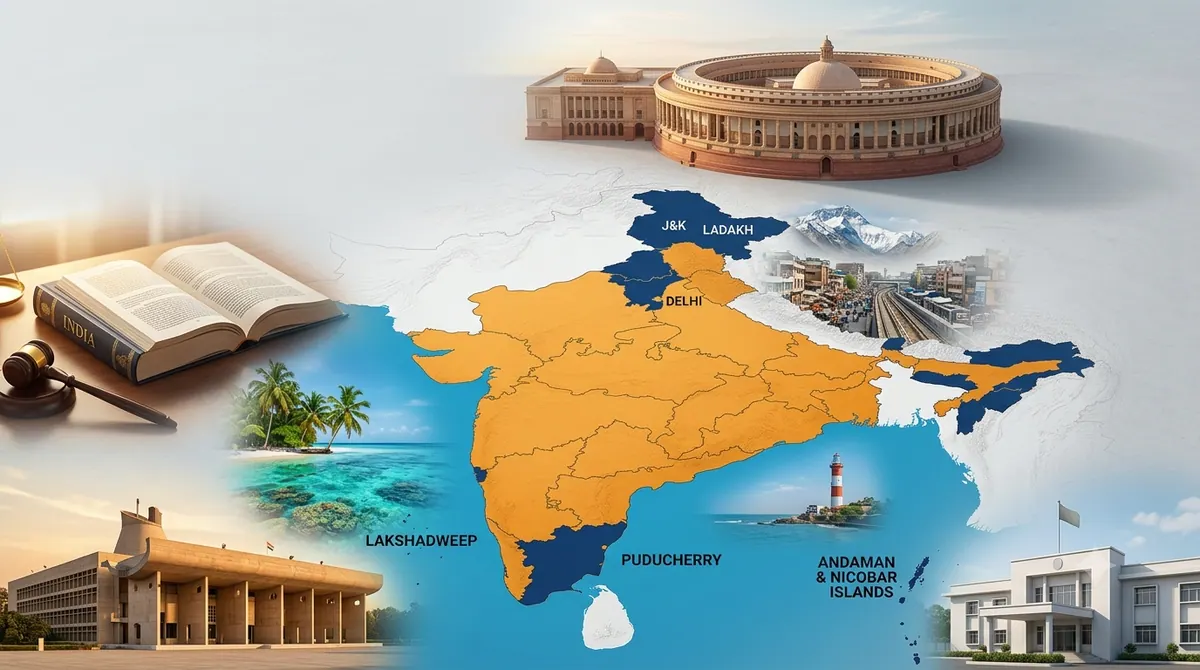
India currently has eight Union Territories:
- Andaman and Nicobar Islands
- Chandigarh
- Dadra and Nagar Haveli and Daman and Diu
- Delhi (National Capital Territory of Delhi)
- Jammu and Kashmir
- Ladakh
- Lakshadweep
- Puducherry
Each has its own administrative characteristics.
Why Does Delhi Have a Different System?
Delhi is particularly interesting because it is both a major urban region and the national capital.
It is officially the National Capital Territory of Delhi (NCT of Delhi) and has an elected Legislative Assembly and Council of Ministers.
However, its constitutional and legal framework differs from that of a full-fledged state.
Certain important matters, including public order, police, and land, remain outside the legislative and executive powers of the Delhi government under the applicable constitutional provisions.
This arrangement reflects Delhi's unique role as India's national capital.
What About Jammu and Kashmir and Ladakh?
The current structure of Jammu and Kashmir and Ladakh came into existence in 2019.
The former State of Jammu and Kashmir was reorganized into two Union Territories:
- Union Territory of Jammu and Kashmir
- Union Territory of Ladakh
Jammu and Kashmir has a Legislative Assembly under the applicable constitutional and statutory framework, while Ladakh does not have a legislative assembly.
This reorganization significantly changed the administrative structure of the region.
Why Don't All Union Territories Have Legislatures?
The Constitution allows Parliament to create legislative arrangements for certain Union Territories.
However, whether a UT has an elected legislature depends on its specific constitutional and legal framework.
For example, Delhi, Jammu and Kashmir, and Puducherry have legislative assemblies, while other Union Territories do not.
This means the term "Union Territory" does not automatically mean that every region is governed in exactly the same way.
Can a Union Territory Become a State?
Yes.
India's political map has changed several times since Independence.
Some regions that were once Union Territories later became states.
For example, Goa was a Union Territory before becoming a state in 1987.
This demonstrates that India's administrative structure is not permanently fixed. Parliament can reorganize states and Union Territories through legislation, subject to the constitutional process.
Who Governs a Union Territory?
The President appoints an Administrator or Lieutenant Governor to administer a Union Territory.
The exact powers and responsibilities vary depending on the constitutional and statutory framework applicable to that particular UT.
In UTs with elected governments, the relationship between the Lieutenant Governor and elected government is governed by the relevant constitutional provisions and laws.
In UTs without legislatures, administration is more directly carried out through the Administrator and the Union Government.
States vs Union Territories: The Simple Difference
Think of it this way:
State: Has its own elected state government and exercises substantial constitutional powers over state subjects.
Union Territory: Has a closer administrative relationship with the Union Government, with the exact structure varying from one UT to another.
That distinction is useful, but the reality is more nuanced because Union Territories themselves are not all governed identically.
Why Are Union Territories Important?
Union Territories play important roles in India's administration, geography, economy, and national security.
For example:
Andaman and Nicobar Islands have major strategic significance because of their location in the Indian Ocean. Lakshadweep consists of islands with unique geographical and environmental characteristics. Chandigarh serves as the capital of both Punjab and Haryana while being a separate Union Territory. Delhi is the country's political and administrative center. Ladakh has significant geographical and strategic importance because of its location in the Himalayas.
Their diverse circumstances explain why a single administrative model would not necessarily work for every region.
Frequently asked questions
India is divided into states and Union Territories, but have you ever wondered why both exist?
Most people understand what a state is. Maharashtra has its own government, Karnataka has its own government, and Rajasthan has its own government. But places such as Delhi, Chandigarh, Ladakh, and the Andaman and Nicobar Islands follow a different administrative structure. These regions are known as Union Territories (UTs). So, what exactly makes a Union Territory different from a state? Why were some regions placed
What Is a Union Territory?
A Union Territory is a region of India that is administered by the Union Government under the constitutional framework applicable to Union Territories. Unlike states, which have their own constitutional position and elected governments with powers over various subjects, Union Territories generally have a closer administrative relationship with the Central Government. The Constitution contains specific provisions deal
How Is a State Different from a Union Territory?
The biggest difference is the degree of autonomy. A state has its own elected government headed by a Chief Minister and a Council of Ministers. State governments exercise legislative and executive powers over subjects assigned to them by the Constitution. Union Territories are generally administered more directly by the Union Government. However, there isn't one identical model for every UT. Some Union Territories ha
Why Does India Need Union Territories?
There isn't one single reason why a region becomes a Union Territory. Different UTs have different historical, geographical, strategic, and administrative backgrounds. Some are geographically small. Some are islands located far from mainland India. Some have strategic importance. Others have historical circumstances that led to a special administrative arrangement. This flexibility allows the Union Government to admi
How Many Union Territories Does India Have?
India currently has eight Union Territories: Andaman and Nicobar IslandsChandigarhDadra and Nagar Haveli and Daman and DiuDelhi (National Capital Territory of Delhi)Jammu and KashmirLadakhLakshadweepPuducherry Each has its own administrative characteristics.
Why Does Delhi Have a Different System?
Delhi is particularly interesting because it is both a major urban region and the national capital. It is officially the National Capital Territory of Delhi (NCT of Delhi) and has an elected Legislative Assembly and Council of Ministers. However, its constitutional and legal framework differs from that of a full-fledged state. Certain important matters, including public order, police, and land, remain outside the leg
What About Jammu and Kashmir and Ladakh?
The current structure of Jammu and Kashmir and Ladakh came into existence in 2019. The former State of Jammu and Kashmir was reorganized into two Union Territories: Union Territory of Jammu and KashmirUnion Territory of Ladakh Jammu and Kashmir has a Legislative Assembly under the applicable constitutional and statutory framework, while Ladakh does not have a legislative assembly. This reorganization significantly ch
Why Don't All Union Territories Have Legislatures?
The Constitution allows Parliament to create legislative arrangements for certain Union Territories. However, whether a UT has an elected legislature depends on its specific constitutional and legal framework. For example, Delhi, Jammu and Kashmir, and Puducherry have legislative assemblies, while other Union Territories do not. This means the term "Union Territory" does not automatically mean that every region is go
Can a Union Territory Become a State?
Yes. India's political map has changed several times since Independence. Some regions that were once Union Territories later became states. For example, Goa was a Union Territory before becoming a state in 1987. This demonstrates that India's administrative structure is not permanently fixed. Parliament can reorganize states and Union Territories through legislation, subject to the constitutional process.
Who Governs a Union Territory?
The President appoints an Administrator or Lieutenant Governor to administer a Union Territory. The exact powers and responsibilities vary depending on the constitutional and statutory framework applicable to that particular UT. In UTs with elected governments, the relationship between the Lieutenant Governor and elected government is governed by the relevant constitutional provisions and laws. In UTs without legisla
Continue your preparation
Topics covered
About the author
Search Sarkari Naukri Team reviews government-job information, competitive-exam guidance and public-system explainers. Verify time-sensitive requirements on the relevant official authority's website.
Related articles
- Why Did the PMO Move Out of South Block? The Story Behind India’s New Seva Teerth — Government Facts
- What Happens When Your Dream Exam Is Not Your Best Opportunity? — Exam Culture & Society
- Is a Government Job Still the Best “Safe” Career Choice? — Careers & Society
- What Is a Gazetted Officer? And Why Their Signature Matters — Government Policies & Explained
- Why Do Aspirants Feel Guilty for Having a Backup Plan? — Exam Culture & Society
- Title: Why Does Preparing for a Government Job Sometimes Feel Like a Full-Time Job? — Exam Culture & Society