Government Policies & Explained
What Is the Right to Information (RTI) Act? How Citizens Can Seek Government Information
By: Search Sarkari Naukri Team · Published: · Updated: · 4 min read
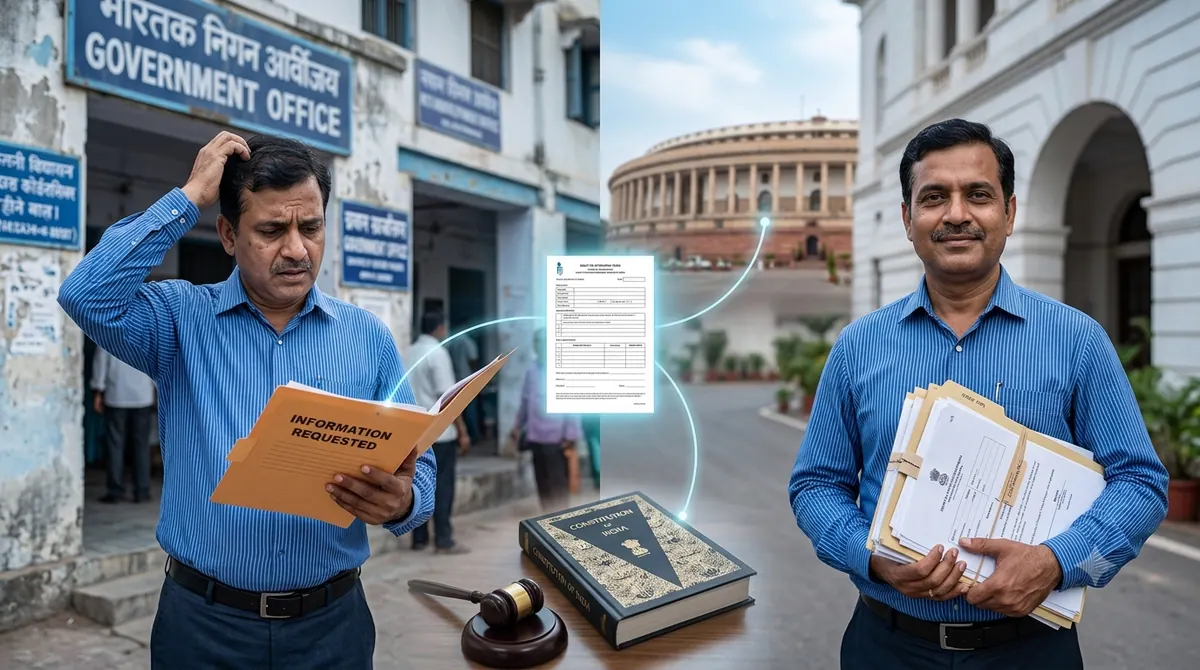
Quick summary
The Right to Information (RTI) Act empowers Indian citizens to seek information from public authorities. Learn how RTI works, who can file an application, and why it is considered a powerful tool for transparency.
- Primary topic
- RTI Act
- Category
- Government Policies & Explained
- Reading time
- 4 minutes
- Last reviewed
- 2026-10-04
What Is the Right to Information (RTI) Act? How Citizens Can Seek Government Information
Imagine you want to know how a road project in your area is progressing, why your application for a government scheme is delayed, or how public money is being spent by a government department. Can you legally ask the government for this information?
The answer is yes.
The Right to Information (RTI) Act gives every Indian citizen the legal right to request information from public authorities. Since its implementation, the RTI Act has become one of the most important tools for promoting transparency, accountability, and citizen participation in governance.
Let's understand what the RTI Act is, how it works, and why it is considered a milestone in Indian democracy.
What Is the RTI Act?
The Right to Information Act, 2005 is a law that allows Indian citizens to request information from government departments and public authorities.
The main objective of the Act is to make government functioning more transparent and accountable by allowing citizens to access official information that is not exempt under the law.
The RTI Act recognizes that information held by public authorities belongs to the public, except in cases where disclosure could affect national security, privacy, or other protected interests.
Why Was the RTI Act Introduced?
Before the RTI Act, obtaining information from government departments was often difficult.
Citizens frequently faced challenges such as:
Lack of transparency. Delayed responses. Limited access to official records. Difficulty understanding government decisions.
The RTI Act was introduced to improve openness in public administration and strengthen the relationship between citizens and the government.
It also encourages better record-keeping and greater accountability among public authorities.
Who Can File an RTI Application?
Any Indian citizen can file an RTI application.
You do not need to explain why you are seeking the information.
The law only requires that your request clearly specifies the information you wish to obtain.
This makes the process accessible to ordinary citizens who want to understand government actions or seek official records.
What Information Can Be Requested?
Citizens can request a wide variety of information held by public authorities.
Examples include:
Status of government applications. Copies of official documents. Government orders and circulars. Details of public expenditure. Tender and contract information. Recruitment procedures. Development project details. Rules and guidelines followed by departments.
The information requested must already exist in official records. Public authorities are not required to create new information or provide personal opinions.
What Information Cannot Be Shared?
The RTI Act also protects certain categories of information.
Some information may be exempt from disclosure, including:
Information affecting national security. Sensitive defence and intelligence matters. Certain personal information that would invade an individual's privacy. Information protected by court orders. Trade secrets and commercially confidential information in specified circumstances.
These exemptions are intended to balance transparency with legitimate public interests.
How Does the RTI Process Work?
The process is designed to be straightforward.
A citizen submits an RTI application to the appropriate public authority, describing the information required.
The application is examined by the designated Public Information Officer (PIO), who is responsible for processing RTI requests.
If the requested information is available and not exempt under the Act, it is provided within the time limits prescribed by law.
If the application is sent to the wrong department, it may be transferred to the appropriate authority according to the provisions of the Act.
Why Is RTI Important?
The RTI Act has strengthened democratic governance in several ways.
It enables citizens to:
Understand government decision-making. Monitor implementation of public projects. Seek updates on pending applications. Improve transparency in public administration. Encourage accountability among public officials.
By making information more accessible, the Act helps build greater public trust in government institutions.
Does RTI Help Reduce Corruption?
The RTI Act is often regarded as an important tool for promoting transparency.
When government records become accessible to citizens, departments are encouraged to maintain proper documentation and follow established procedures.
Although RTI alone cannot eliminate corruption, greater openness can help identify administrative shortcomings and encourage more accountable governance.
Challenges in Implementing RTI
Despite its importance, the RTI system also faces certain challenges.
These include:
Delays in responding to applications. Increasing workload on public authorities. Limited public awareness in some regions. Need for improved record management. Digital accessibility in remote areas.
Continuous improvements in administration and technology can help make the system more efficient.
RTI and Competitive Exams
The Right to Information Act is an important topic in examinations such as:
- UPSC Civil Services
- SSC CGL
- Banking examinations
- State PSC examinations
- Other competitive recruitment tests
Candidates are often expected to understand the objectives, features, significance, and limitations of the Act as part of their General Awareness or Polity syllabus.
Why Every Citizen Should Know About RTI
The RTI Act is not only relevant for lawyers, journalists, or activists.
Ordinary citizens may use it to seek information about public services, government schemes, infrastructure projects, recruitment procedures, and many other administrative matters.
Understanding this law empowers citizens to participate more actively in democratic governance while encouraging greater openness in public administration.
Frequently asked questions
What Is the RTI Act?
The Right to Information Act, 2005 is a law that allows Indian citizens to request information from government departments and public authorities. The main objective of the Act is to make government functioning more transparent and accountable by allowing citizens to access official information that is not exempt under the law. The RTI Act recognizes that information held by public authorities belongs to the public,
Why Was the RTI Act Introduced?
Before the RTI Act, obtaining information from government departments was often difficult. Citizens frequently faced challenges such as: Lack of transparency. Delayed responses. Limited access to official records. Difficulty understanding government decisions. The RTI Act was introduced to improve openness in public administration and strengthen the relationship between citizens and the government. It also encourages
Who Can File an RTI Application?
Any Indian citizen can file an RTI application. You do not need to explain why you are seeking the information. The law only requires that your request clearly specifies the information you wish to obtain. This makes the process accessible to ordinary citizens who want to understand government actions or seek official records.
What Information Can Be Requested?
Citizens can request a wide variety of information held by public authorities. Examples include: Status of government applications. Copies of official documents. Government orders and circulars. Details of public expenditure. Tender and contract information. Recruitment procedures. Development project details. Rules and guidelines followed by departments. The information requested must already exist in official recor
What Information Cannot Be Shared?
The RTI Act also protects certain categories of information. Some information may be exempt from disclosure, including: Information affecting national security. Sensitive defence and intelligence matters. Certain personal information that would invade an individual's privacy. Information protected by court orders. Trade secrets and commercially confidential information in specified circumstances. These exemptions are
How Does the RTI Process Work?
The process is designed to be straightforward. A citizen submits an RTI application to the appropriate public authority, describing the information required. The application is examined by the designated Public Information Officer (PIO), who is responsible for processing RTI requests. If the requested information is available and not exempt under the Act, it is provided within the time limits prescribed by law. If th
Why Is RTI Important?
The RTI Act has strengthened democratic governance in several ways. It enables citizens to: Understand government decision-making. Monitor implementation of public projects. Seek updates on pending applications. Improve transparency in public administration. Encourage accountability among public officials. By making information more accessible, the Act helps build greater public trust in government institutions.
Does RTI Help Reduce Corruption?
The RTI Act is often regarded as an important tool for promoting transparency. When government records become accessible to citizens, departments are encouraged to maintain proper documentation and follow established procedures. Although RTI alone cannot eliminate corruption, greater openness can help identify administrative shortcomings and encourage more accountable governance.
Continue your preparation
Topics covered
About the author
Search Sarkari Naukri Team reviews government-job information, competitive-exam guidance and public-system explainers. Verify time-sensitive requirements on the relevant official authority's website.
Related articles
- Can Government Employees Start a YouTube Channel or Business? Rules Explained — Government Policies & Explained
- UPI Charges From October 15, 2026 – New 0.4% MDR Rule, Exemptions & What Users Need to Know — Government Policies & Explained
- What Is a Gazetted Officer? And Why Their Signature Matters — Government Policies & Explained
- 12th Pass Sarkari Naukri 2026: Jobs, Eligibility & How to Apply — Government Job Guides
- Age Limit for Government Jobs 2026: Rules, Relaxation & How to Check — Government Job Guides
- 10th and 12th Pass Government Jobs in India 2026: Best Career Options, Salary & How to Apply — Career Guide
More in Government Policies & Explained →