What Is the Public Accounts Committee (PAC)? How Parliament Checks Government Spending
By: Search Sarkari Naukri Team · Published: · Updated: · 4 min read
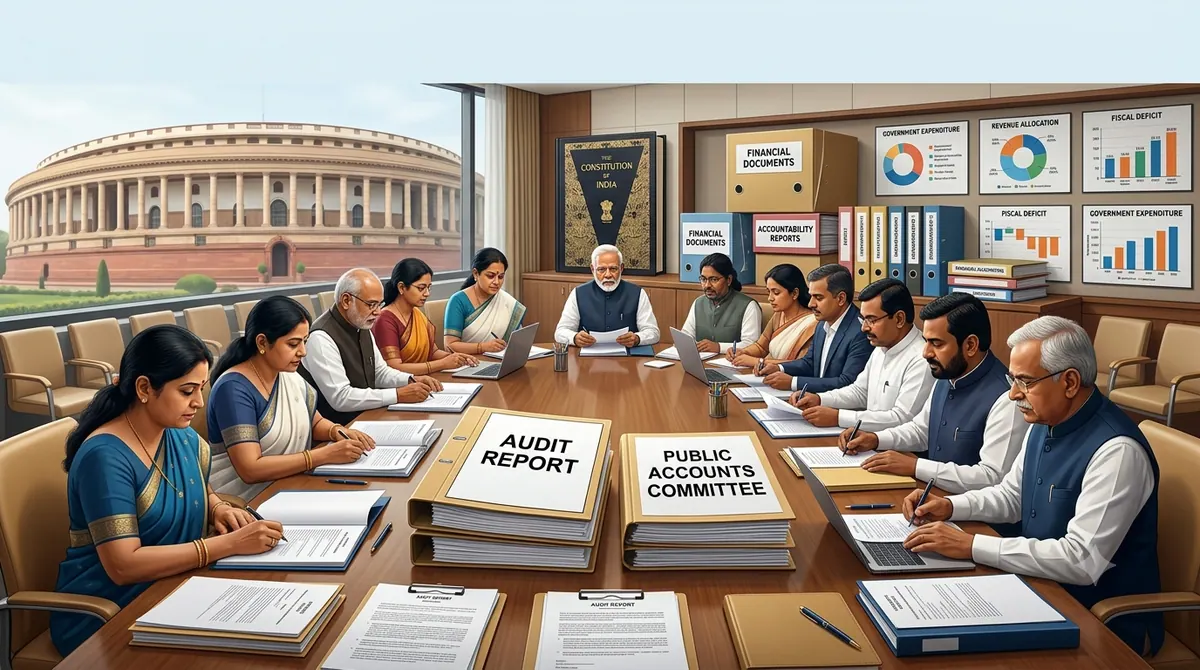
Quick summary
The Public Accounts Committee (PAC) plays a vital role in ensuring that public money is spent responsibly. Learn how the PAC works, its relationship with the CAG, and why it is an important pillar of parliamentary oversight in India.
- Primary topic
- Public Accounts Committee
- Category
- Government System
- Reading time
- 4 minutes
- Last reviewed
- 2026-08-20
What Is the Public Accounts Committee (PAC)? How Parliament Checks Government Spending
Every year, the Government of India spends vast amounts of public money on infrastructure, healthcare, education, defence, welfare schemes, railways, and countless other public services. Since this money comes primarily from taxpayers, an important question naturally arises—who checks whether the government has spent it properly?
While the Comptroller and Auditor General (CAG) audits government accounts, Parliament has its own mechanism to examine those audit findings. This responsibility belongs to the Public Accounts Committee (PAC).
Although the PAC frequently appears in discussions about government accountability, many people know very little about its actual role. Let's understand what the Public Accounts Committee is, how it works, and why it is considered one of Parliament's most important oversight bodies.
What Is the Public Accounts Committee?
The Public Accounts Committee (PAC) is one of the oldest and most important parliamentary committees in India.
Its primary responsibility is to examine whether public money approved by Parliament has been spent legally, efficiently, and for the intended purposes.
The PAC does not make government policies or approve budgets. Instead, it reviews how government departments have used public funds after the money has already been spent.
This makes the committee an essential part of financial accountability in India's parliamentary system.
Why Was the PAC Created?
Parliament approves government expenditure through the Union Budget every year.
However, approving expenditure is only one part of the process.
Someone must also verify whether:
Government departments spent the money correctly. Public funds were used for the approved purpose. Financial rules were followed. Wasteful expenditure was avoided. Administrative procedures were properly observed.
The Public Accounts Committee performs this important oversight function on behalf of Parliament.
How Is the PAC Connected to the CAG?
The PAC and the Comptroller and Auditor General (CAG) work closely, but they perform different functions.
The CAG independently audits government accounts and prepares detailed audit reports.
The PAC studies these reports after they are presented to Parliament.
In simple terms:
CAG identifies financial and procedural issues. PAC examines those findings and seeks explanations from the concerned government departments.
This relationship makes both institutions important pillars of financial accountability.
Who Are the Members of the PAC?
The Public Accounts Committee consists of Members of Parliament from both Houses.
Its members are elected or nominated according to parliamentary procedures, ensuring representation from different political parties.
Traditionally, the Chairperson of the PAC is chosen from the Opposition, a practice that helps strengthen independent parliamentary scrutiny of government expenditure.
This convention has played an important role in maintaining the committee's credibility over the years.
What Does the PAC Actually Do?
The committee examines whether government expenditure matches the purposes approved by Parliament.
It studies:
CAG audit reports. Government financial records. Expenditure by ministries. Public sector organizations where applicable. Utilization of government funds.
The committee may also call government officials to explain observations made in audit reports and clarify administrative decisions.
Its discussions often focus on improving financial management and preventing future irregularities.
Does the PAC Investigate Corruption?
This is a common misconception.
The PAC is not an investigative agency.
It does not conduct criminal investigations or impose punishments.
Instead, its role is to examine audit findings, identify weaknesses in financial management, and recommend improvements.
If audit observations indicate serious issues, other legally authorized agencies may take action under applicable laws.
Why Are PAC Reports Important?
The committee prepares reports after examining government expenditure and departmental responses.
These reports often include:
Findings based on CAG observations. Recommendations for improving financial management. Suggestions for strengthening administrative procedures. Observations on compliance with parliamentary approvals.
Although the committee's recommendations are not judicial orders, they carry considerable importance because they are presented before Parliament.
Government departments are expected to respond to the committee's observations and take corrective measures where necessary.
How Does the PAC Help Citizens?
Most citizens may never directly interact with the Public Accounts Committee, but its work affects everyone.
By examining government expenditure, the PAC contributes to better management of public resources allocated to:
Roads and highways. Public healthcare. Schools and universities. Railways. Defence. Rural development. Welfare schemes. Infrastructure projects.
Effective financial oversight ultimately supports better governance and more efficient public services.
Why Is Parliamentary Oversight Important?
In a parliamentary democracy, governments are accountable to Parliament.
Approving expenditure alone is not sufficient.
There must also be mechanisms to review whether public money has been used responsibly.
The PAC strengthens this accountability by ensuring that government departments explain how taxpayers' money has been utilized.
This process encourages transparency, improves financial discipline, and reinforces democratic governance.
Why Is the PAC Important for Competitive Exams?
The Public Accounts Committee is an important topic in examinations such as:
- UPSC Civil Services
- SSC CGL
- State PSC examinations
- Banking examinations
- Other competitive recruitment tests
Candidates are often expected to know:
The role of the PAC. Its relationship with the CAG. Its functions. Parliamentary financial oversight. Constitutional and parliamentary accountability.
Understanding the PAC also helps build a stronger understanding of India's parliamentary system.
Frequently asked questions
What Is the Public Accounts Committee?
The Public Accounts Committee (PAC) is one of the oldest and most important parliamentary committees in India. Its primary responsibility is to examine whether public money approved by Parliament has been spent legally, efficiently, and for the intended purposes. The PAC does not make government policies or approve budgets. Instead, it reviews how government departments have used public funds after the money has alre
Why Was the PAC Created?
Parliament approves government expenditure through the Union Budget every year. However, approving expenditure is only one part of the process. Someone must also verify whether: Government departments spent the money correctly. Public funds were used for the approved purpose. Financial rules were followed. Wasteful expenditure was avoided. Administrative procedures were properly observed. The Public Accounts Committe
How Is the PAC Connected to the CAG?
The PAC and the Comptroller and Auditor General (CAG) work closely, but they perform different functions. The CAG independently audits government accounts and prepares detailed audit reports. The PAC studies these reports after they are presented to Parliament. In simple terms: CAG identifies financial and procedural issues. PAC examines those findings and seeks explanations from the concerned government departments.
Who Are the Members of the PAC?
The Public Accounts Committee consists of Members of Parliament from both Houses. Its members are elected or nominated according to parliamentary procedures, ensuring representation from different political parties. Traditionally, the Chairperson of the PAC is chosen from the Opposition, a practice that helps strengthen independent parliamentary scrutiny of government expenditure. This convention has played an import
What Does the PAC Actually Do?
The committee examines whether government expenditure matches the purposes approved by Parliament. It studies: CAG audit reports. Government financial records. Expenditure by ministries. Public sector organizations where applicable. Utilization of government funds. The committee may also call government officials to explain observations made in audit reports and clarify administrative decisions. Its discussions often
Does the PAC Investigate Corruption?
This is a common misconception. The PAC is not an investigative agency. It does not conduct criminal investigations or impose punishments. Instead, its role is to examine audit findings, identify weaknesses in financial management, and recommend improvements. If audit observations indicate serious issues, other legally authorized agencies may take action under applicable laws.
Why Are PAC Reports Important?
The committee prepares reports after examining government expenditure and departmental responses. These reports often include: Findings based on CAG observations. Recommendations for improving financial management. Suggestions for strengthening administrative procedures. Observations on compliance with parliamentary approvals. Although the committee's recommendations are not judicial orders, they carry considerable i
How Does the PAC Help Citizens?
Most citizens may never directly interact with the Public Accounts Committee, but its work affects everyone. By examining government expenditure, the PAC contributes to better management of public resources allocated to: Roads and highways. Public healthcare. Schools and universities. Railways. Defence. Rural development. Welfare schemes. Infrastructure projects. Effective financial oversight ultimately supports bett
Why Is Parliamentary Oversight Important?
In a parliamentary democracy, governments are accountable to Parliament. Approving expenditure alone is not sufficient. There must also be mechanisms to review whether public money has been used responsibly. The PAC strengthens this accountability by ensuring that government departments explain how taxpayers' money has been utilized. This process encourages transparency, improves financial discipline, and reinforces
Why Is the PAC Important for Competitive Exams?
The Public Accounts Committee is an important topic in examinations such as: UPSC Civil ServicesSSC CGLState PSC examinationsBanking examinationsOther competitive recruitment tests Candidates are often expected to know: The role of the PAC. Its relationship with the CAG. Its functions. Parliamentary financial oversight. Constitutional and parliamentary accountability. Understanding the PAC also helps build a stronger
Continue your preparation
Topics covered
About the author
Search Sarkari Naukri Team reviews government-job information, competitive-exam guidance and public-system explainers. Verify time-sensitive requirements on the relevant official authority's website.
Related articles
- Can a Government Employee Be Transferred Against Their Will? The Rules Explained — Government System
- What Happens When Your Dream Exam Is Not Your Best Opportunity? — Exam Culture & Society
- Is a Government Job Still the Best “Safe” Career Choice? — Careers & Society
- What Is a Gazetted Officer? And Why Their Signature Matters — Government Policies & Explained
- Why Do Aspirants Feel Guilty for Having a Backup Plan? — Exam Culture & Society
- Title: Why Does Preparing for a Government Job Sometimes Feel Like a Full-Time Job? — Exam Culture & Society