What Is the Comptroller and Auditor General (CAG)? Why Its Reports Matter
By: Search Sarkari Naukri Team · Published: · Updated: · 4 min read
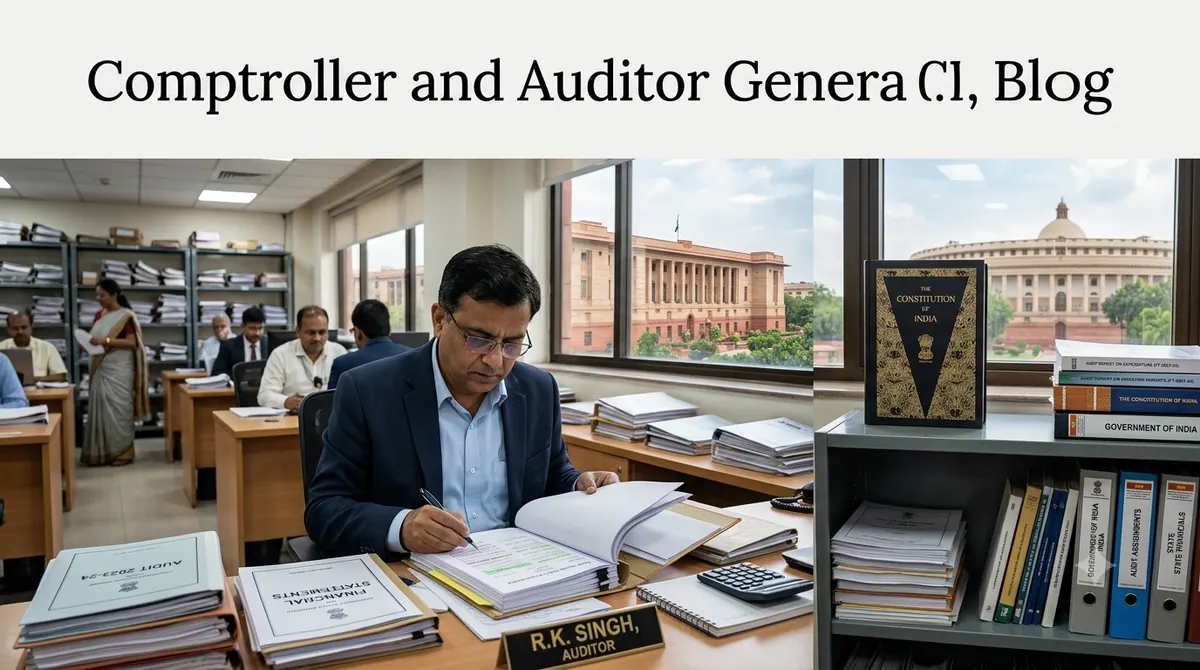
Quick summary
The Comptroller and Auditor General (CAG) is one of India's most important constitutional authorities. Learn what the CAG does, how government audits work, and why its reports play a vital role in ensuring transparency and accountability.
- Primary topic
- CAG India
- Category
- Government System
- Reading time
- 4 minutes
- Last reviewed
- 2026-08-20
What Is the Comptroller and Auditor General (CAG)? Why Its Reports Matter
Every year, the Government of India spends lakhs of crores of rupees on roads, railways, healthcare, education, defence, welfare schemes, and many other public services. But an important question arises—who checks whether this money is being spent properly?
The responsibility of independently examining government finances belongs to one of India's most important constitutional authorities: the Comptroller and Auditor General (CAG).
Although CAG reports frequently make headlines, many people are unaware of what the institution actually does or why its work is so important.
Let's understand the role of the CAG in simple language.
What Is the Comptroller and Auditor General (CAG)?
The Comptroller and Auditor General of India (CAG) is an independent constitutional authority responsible for auditing the accounts of the Union Government, State Governments, and many government-funded organizations.
The office of the CAG was established under the Constitution of India to ensure that public money is used legally, efficiently, and for the purposes approved by Parliament or State Legislatures.
Because of its independent status, the CAG plays a key role in promoting transparency and financial accountability in governance.
Why Is the CAG Important?
Every rupee collected by the government through taxes, duties, and other sources ultimately belongs to the public.
The CAG helps answer important questions such as:
Was government money spent according to the law? Were public funds used efficiently? Were financial rules followed? Were government projects properly managed?
Its audits help identify financial irregularities, procedural lapses, and areas where public resources could be managed more effectively.
Is the CAG Part of the Government?
No.
Although the CAG audits government departments, it functions independently of the executive.
This independence is important because it allows the CAG to examine government finances objectively without being influenced by the departments it audits.
The Constitution provides safeguards regarding the appointment, tenure, and removal of the CAG to protect the office's independence.
What Does the CAG Audit?
The CAG audits a wide range of government institutions and activities.
These include:
- Central Government ministries
- State Government departments
- Government-funded projects
- Public sector undertakings (in accordance with applicable laws)
- Autonomous bodies receiving government funds
- Local bodies in certain cases as provided by law
The objective is to verify whether public funds are being utilized responsibly and in accordance with established rules.
Types of Audits Conducted by the CAG
The CAG does more than simply check accounts.
Different types of audits help evaluate different aspects of government functioning.
Financial Audit
This examines whether financial statements accurately reflect government transactions and whether proper accounting practices have been followed.
Compliance Audit
Compliance audits verify whether departments have followed applicable laws, rules, regulations, and government procedures while spending public money.
Performance Audit
Performance audits evaluate whether government schemes and projects have achieved their intended objectives efficiently, economically, and effectively.
For example, a performance audit may examine whether a large infrastructure project delivered the expected results within the approved budget and timeline.
What Happens After an Audit?
Once an audit is completed, the CAG prepares a detailed report.
These reports are submitted to the President of India or the Governor of a State, depending on whether the audit relates to the Central Government or a State Government.
The reports are then presented before Parliament or the respective State Legislature.
Legislative committees, such as the Public Accounts Committee (PAC), examine the findings and may call government departments to explain the issues identified in the audit.
This process strengthens financial oversight and democratic accountability.
Does the CAG Punish Anyone?
No.
A common misconception is that the CAG has the authority to impose penalties or prosecute individuals.
In reality, the CAG is an auditing authority—not an investigating or judicial body.
Its role is to identify issues, present factual findings, and recommend improvements.
Any further action, if required, is taken by the appropriate government authorities, investigative agencies, or courts in accordance with the law.
Why Do CAG Reports Often Make News?
CAG reports sometimes receive significant media attention because they may highlight:
- Cost overruns in public projects
- Delays in implementation
- Weak financial controls
- Procedural irregularities
- Inefficient use of public funds
It is important to understand that such reports are intended to improve governance and strengthen accountability rather than determine criminal liability.
They often encourage governments to review procedures and improve financial management.
How Does the CAG Benefit Citizens?
Although the CAG works behind the scenes, its work benefits every citizen.
Effective auditing helps ensure that taxpayer money is spent responsibly on public services such as:
- Roads and highways
- Schools and universities
- Hospitals
- Railways
- Defence
- Rural development
- Welfare schemes
- Public infrastructure
By identifying weaknesses and recommending corrective measures, the CAG contributes to better governance and more efficient use of public resources.
Why Is the CAG Important for Competitive Exams?
The Comptroller and Auditor General is an important topic in exams such as:
- UPSC Civil Services
- SSC CGL
- Banking examinations
- State PSC examinations
- Other competitive recruitment tests
Questions often focus on its constitutional status, functions, powers, appointment, and role in maintaining financial accountability.
Understanding the CAG also helps candidates strengthen their knowledge of India's constitutional institutions.
Frequently asked questions
What Is the Comptroller and Auditor General (CAG)?
The Comptroller and Auditor General of India (CAG) is an independent constitutional authority responsible for auditing the accounts of the Union Government, State Governments, and many government-funded organizations. The office of the CAG was established under the Constitution of India to ensure that public money is used legally, efficiently, and for the purposes approved by Parliament or State Legislatures. Because
Why Is the CAG Important?
Every rupee collected by the government through taxes, duties, and other sources ultimately belongs to the public. The CAG helps answer important questions such as: Was government money spent according to the law? Were public funds used efficiently? Were financial rules followed? Were government projects properly managed? Its audits help identify financial irregularities, procedural lapses, and areas where public res
Is the CAG Part of the Government?
No. Although the CAG audits government departments, it functions independently of the executive. This independence is important because it allows the CAG to examine government finances objectively without being influenced by the departments it audits. The Constitution provides safeguards regarding the appointment, tenure, and removal of the CAG to protect the office's independence.
What Does the CAG Audit?
The CAG audits a wide range of government institutions and activities. These include: Central Government ministriesState Government departmentsGovernment-funded projectsPublic sector undertakings (in accordance with applicable laws)Autonomous bodies receiving government fundsLocal bodies in certain cases as provided by law The objective is to verify whether public funds are being utilized responsibly and in accordanc
What Happens After an Audit?
Once an audit is completed, the CAG prepares a detailed report. These reports are submitted to the President of India or the Governor of a State, depending on whether the audit relates to the Central Government or a State Government. The reports are then presented before Parliament or the respective State Legislature. Legislative committees, such as the Public Accounts Committee (PAC), examine the findings and may ca
Does the CAG Punish Anyone?
No. A common misconception is that the CAG has the authority to impose penalties or prosecute individuals. In reality, the CAG is an auditing authority—not an investigating or judicial body. Its role is to identify issues, present factual findings, and recommend improvements. Any further action, if required, is taken by the appropriate government authorities, investigative agencies, or courts in accordance with the l
Why Do CAG Reports Often Make News?
CAG reports sometimes receive significant media attention because they may highlight: Cost overruns in public projectsDelays in implementationWeak financial controlsProcedural irregularitiesInefficient use of public funds It is important to understand that such reports are intended to improve governance and strengthen accountability rather than determine criminal liability. They often encourage governments to review
How Does the CAG Benefit Citizens?
Although the CAG works behind the scenes, its work benefits every citizen. Effective auditing helps ensure that taxpayer money is spent responsibly on public services such as: Roads and highwaysSchools and universitiesHospitalsRailwaysDefenceRural developmentWelfare schemesPublic infrastructure By identifying weaknesses and recommending corrective measures, the CAG contributes to better governance and more efficient
Why Is the CAG Important for Competitive Exams?
The Comptroller and Auditor General is an important topic in exams such as: UPSC Civil ServicesSSC CGLBanking examinationsState PSC examinationsOther competitive recruitment tests Questions often focus on its constitutional status, functions, powers, appointment, and role in maintaining financial accountability. Understanding the CAG also helps candidates strengthen their knowledge of India's constitutional instituti
Continue your preparation
Topics covered
About the author
Search Sarkari Naukri Team reviews government-job information, competitive-exam guidance and public-system explainers. Verify time-sensitive requirements on the relevant official authority's website.
Related articles
- Can a Government Employee Be Transferred Against Their Will? The Rules Explained — Government System
- What Happens When Your Dream Exam Is Not Your Best Opportunity? — Exam Culture & Society
- Is a Government Job Still the Best “Safe” Career Choice? — Careers & Society
- What Is a Gazetted Officer? And Why Their Signature Matters — Government Policies & Explained
- Why Do Aspirants Feel Guilty for Having a Backup Plan? — Exam Culture & Society
- Title: Why Does Preparing for a Government Job Sometimes Feel Like a Full-Time Job? — Exam Culture & Society