One Nation, One Election Explained: What It Means for India
By: Search Sarkari Naukri Team · Published: · Updated: · 5 min read
Quick summary
What is One Nation, One Election? Learn how simultaneous elections could work in India, its potential benefits, challenges, and what it could mean for governance, political parties, and voters.
- Primary topic
- one nation one election
- Category
- Current Affairs
- Reading time
- 5 minutes
- Last reviewed
- 2026-08-20
The idea of "One Nation, One Election" has become one of the most discussed topics in Indian politics and governance over the past few years. Supporters believe it can reduce election costs and improve governance, while critics argue that it raises constitutional and practical challenges.
Although the concept has sparked nationwide debate, many people still wonder what it actually means and how it would work if implemented.
In this article, we'll explain the concept in simple language, explore its potential benefits and challenges, and understand what it could mean for India's democratic system.
What Is One Nation, One Election?
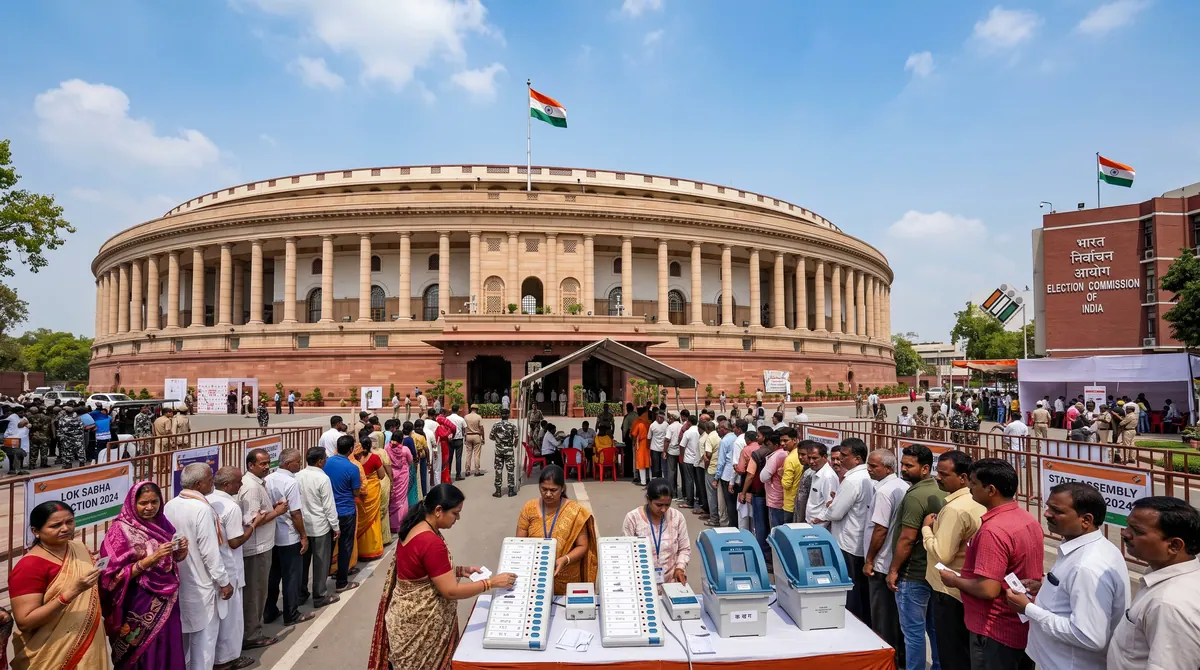
One Nation, One Election (ONOE) refers to the idea of conducting Lok Sabha elections and all State Legislative Assembly elections simultaneously across the country.
Instead of different states holding elections at different times throughout the year, the proposal suggests that voters would cast their votes for both the Central Government and their respective State Governments during the same election period.
The objective is to synchronize election cycles so that national and state elections happen together.
How Does the Current System Work?
At present, India follows separate election schedules.
The Lok Sabha is generally elected every five years. Similarly, each State Legislative Assembly has its own five-year term.
However, because governments sometimes fall before completing their term or assemblies are dissolved early, election schedules gradually become different across states.
As a result, elections take place somewhere in the country almost every year.
This means political parties, election officials, security forces, and government machinery remain engaged in election-related activities frequently.
Why Is One Nation, One Election Being Discussed?
The proposal has gained attention because India conducts elections on a massive scale.
Every election requires:
- Election officials
- Security personnel
- Electronic Voting Machines (EVMs)
- Polling stations
- Administrative staff
- Financial resources
Holding multiple elections throughout the year involves significant planning and expenditure.
Supporters believe that synchronizing elections could improve administrative efficiency and reduce repeated deployment of government resources.
- Potential Benefits of One Nation, One Election
- Reduced Election Expenditure
Conducting elections together may reduce administrative costs related to polling stations, logistics, security arrangements, and election management.
Political parties may also spend less on repeated election campaigns.
2. Better Governance
Whenever elections are announced, the Model Code of Conduct comes into effect, restricting governments from announcing new welfare schemes or major policy decisions.
Frequent elections mean these restrictions are imposed repeatedly.
Supporters argue that simultaneous elections would allow governments to focus more consistently on development and policymaking.
3. Reduced Administrative Burden
Government officers, teachers, and administrative staff are often assigned election duties.
Conducting elections together could reduce repeated deployment and allow officials to concentrate more on their regular responsibilities.
4. Less Campaign Fatigue
Political parties spend considerable time campaigning across different states throughout the year.
A synchronized election schedule may reduce continuous campaigning and encourage greater focus on governance between election cycles.
5. Improved Resource Utilization
Security forces, polling personnel, and election equipment could be utilized more efficiently if elections are organized within a single schedule rather than repeatedly throughout the year.
Challenges of One Nation, One Election
While the proposal offers potential advantages, implementing it is far from simple.
Constitutional Changes
India's Constitution currently provides separate terms for Parliament and State Legislative Assemblies.
Synchronizing elections would likely require amendments to several constitutional provisions and related laws.
Such changes would require broad political agreement.
What Happens If a Government Falls Early?
One of the biggest challenges is handling situations where a government loses majority before completing its five-year term.
Questions arise such as:
Should fresh elections be held immediately? Should President's Rule continue until the next synchronized election? Should only the remaining term be completed?
These issues require careful legal and constitutional solutions.
Impact on Regional Issues
Some experts believe simultaneous elections may shift greater attention toward national issues.
There are concerns that important regional matters affecting individual states could receive less public focus during combined election campaigns.
Logistical Challenges
India is the world's largest democracy.
Conducting simultaneous elections for all parliamentary and assembly constituencies would require:
- A large number of EVMs
- Additional VVPAT machines
- Massive security arrangements
- Extensive polling personnel
- Careful logistical planning
The Election Commission would need substantial preparation to manage such a large-scale exercise.
What Could It Mean for Voters?
For voters, simultaneous elections could mean visiting the polling station once to vote for both the Lok Sabha and the State Assembly.
This may improve convenience for some citizens.
However, voters would also need to carefully evaluate candidates contesting two different elections at the same time, making voter awareness even more important.
Has India Ever Conducted Simultaneous Elections?
Yes.
During the early years after Independence, Lok Sabha and State Assembly elections were held together in 1952, 1957, 1962, and 1967.
The synchronized cycle gradually broke after several state governments were dissolved before completing their terms, leading to separate election schedules across the country.
The current proposal essentially aims to restore a system similar to those early years while adapting it to present-day constitutional and administrative realities.
What Is the Current Status?
The idea of One Nation, One Election has been discussed by policymakers, constitutional experts, political parties, and parliamentary committees.
Any implementation would require extensive legal, constitutional, administrative, and political consensus. Discussions continue on the practical framework, constitutional amendments, and mechanisms needed to make simultaneous elections possible.
Frequently asked questions
What Is One Nation, One Election?
One Nation, One Election (ONOE) refers to the idea of conducting Lok Sabha elections and all State Legislative Assembly elections simultaneously across the country. Instead of different states holding elections at different times throughout the year, the proposal suggests that voters would cast their votes for both the Central Government and their respective State Governments during the same election period. The obje
How Does the Current System Work?
At present, India follows separate election schedules. The Lok Sabha is generally elected every five years. Similarly, each State Legislative Assembly has its own five-year term. However, because governments sometimes fall before completing their term or assemblies are dissolved early, election schedules gradually become different across states. As a result, elections take place somewhere in the country almost every
Why Is One Nation, One Election Being Discussed?
The proposal has gained attention because India conducts elections on a massive scale. Every election requires: Election officialsSecurity personnelElectronic Voting Machines (EVMs)Polling stationsAdministrative staffFinancial resources Holding multiple elections throughout the year involves significant planning and expenditure. Supporters believe that synchronizing elections could improve administrative efficiency a
What Happens If a Government Falls Early?
One of the biggest challenges is handling situations where a government loses majority before completing its five-year term. Questions arise such as: Should fresh elections be held immediately? Should President's Rule continue until the next synchronized election? Should only the remaining term be completed? These issues require careful legal and constitutional solutions.
What Could It Mean for Voters?
For voters, simultaneous elections could mean visiting the polling station once to vote for both the Lok Sabha and the State Assembly. This may improve convenience for some citizens. However, voters would also need to carefully evaluate candidates contesting two different elections at the same time, making voter awareness even more important.
Has India Ever Conducted Simultaneous Elections?
Yes. During the early years after Independence, Lok Sabha and State Assembly elections were held together in 1952, 1957, 1962, and 1967. The synchronized cycle gradually broke after several state governments were dissolved before completing their terms, leading to separate election schedules across the country. The current proposal essentially aims to restore a system similar to those early years while adapting it to
What Is the Current Status?
The idea of One Nation, One Election has been discussed by policymakers, constitutional experts, political parties, and parliamentary committees. Any implementation would require extensive legal, constitutional, administrative, and political consensus. Discussions continue on the practical framework, constitutional amendments, and mechanisms needed to make simultaneous elections possible.
Continue your preparation
Topics covered
About the author
Search Sarkari Naukri Team reviews government-job information, competitive-exam guidance and public-system explainers. Verify time-sensitive requirements on the relevant official authority's website.
Related articles
- What Happens When Your Dream Exam Is Not Your Best Opportunity? — Exam Culture & Society
- Is a Government Job Still the Best “Safe” Career Choice? — Careers & Society
- What Is a Gazetted Officer? And Why Their Signature Matters — Government Policies & Explained
- Why Do Aspirants Feel Guilty for Having a Backup Plan? — Exam Culture & Society
- Title: Why Does Preparing for a Government Job Sometimes Feel Like a Full-Time Job? — Exam Culture & Society
- What Does “Job Security” Actually Mean Anymore? — Work & Society