Why Does India Have So Many Different Types of IDs? Aadhaar, PAN, Voter ID, Passport & More
By: Search Sarkari Naukri Team · Published: · Updated: · 4 min read
Quick summary
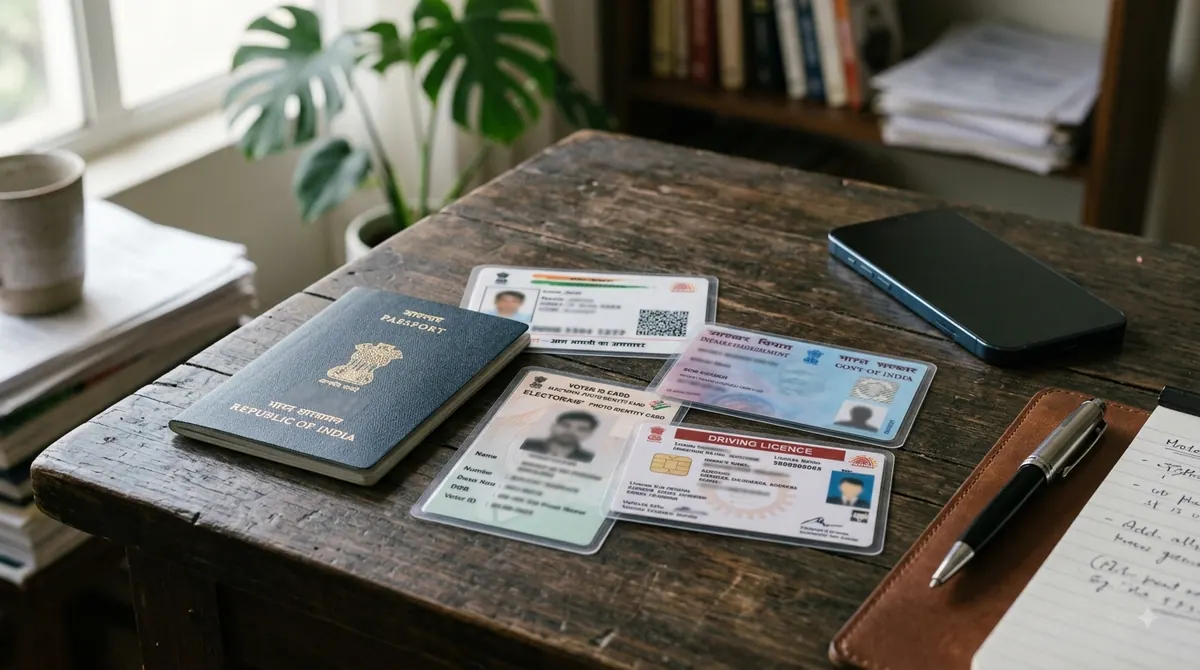
Aadhaar isn't a citizenship certificate. PAN isn't proof of identity in every situation. A passport isn't just for international travel. India has several identity documents because they serve completely different purposes.
- Primary topic
- Aadhaar
- Category
- India Explained
- Reading time
- 4 minutes
- Last reviewed
- 2026-10-01
Why Does One Person Need So Many IDs?
If you've ever had to complete an Indian form, you've probably experienced this:
“Aadhaar number?”
Then another form asks for:
“PAN number?”
Another wants:
“Voter ID.”
A bank asks for something else.
A passport office wants another set of documents.
And suddenly you're sitting there wondering:
Why does India need five different IDs to prove that I'm me?
The answer is surprisingly simple.
They aren't actually designed to do the same thing.
Aadhaar Is Not a Citizenship Card
This is probably the biggest misconception.
Aadhaar is primarily an identity document based on demographic and biometric information.
It can be used for identity verification and accessing various services where Aadhaar authentication is permitted.
But having an Aadhaar number does not automatically prove Indian citizenship.
That's an important distinction.
Then What Is PAN?
PAN stands for Permanent Account Number.
It is primarily associated with taxation and financial transactions.
The Income Tax Department uses PAN to connect certain financial and tax-related activities to a particular person or entity.
That's why PAN becomes particularly important when you're dealing with:
- Income tax
- Certain financial transactions
- Investments
- Banking-related requirements
- Taxable income and reporting
So PAN isn't simply “another Aadhaar.”
It exists for a different administrative purpose.
What About Voter ID?
Voter ID is connected to India's electoral system.
Its purpose is associated with identifying eligible voters and facilitating participation in elections.
And here's another important distinction:
Being an Aadhaar holder doesn't automatically mean you are eligible to vote.
Voting eligibility depends on electoral law and the conditions for registration as a voter.
Then There's the Passport
A passport is primarily a travel document.
It allows an individual to travel internationally and establishes identity and nationality/citizenship information for international travel purposes.
It can also function as an important identity document.
But you don't need a passport just to prove your identity in everyday life.
That's because carrying a passport to buy groceries would be hilariously unnecessary.
And the Driving Licence?
A driving licence has a completely different primary purpose.
It authorises an individual to drive particular classes of motor vehicles, subject to the conditions of the licence.
It can also be accepted as an identity or address document in certain situations.
But its core purpose remains:
permission to drive.
So Why Not Just Have One Universal ID?
This sounds logical.
One number.
One card.
Problem solved.
Except identity isn't the only thing governments need to establish.
Different systems answer different questions.
For example:
Aadhaar: Can this identity be authenticated?
PAN: Who is associated with this tax/financial identity?
Voter registration: Is this person registered to vote?
Passport: Can this person travel internationally with a government-issued travel document?
Driving licence: Is this person authorised to drive?
Those are completely different administrative questions.
The Interesting Part: One Document Can Be Used for Multiple Things
Here's where it gets confusing.
A document created for one purpose can sometimes be accepted as proof of identity or address for another purpose.
That's why people start thinking:
“Everything is basically an ID card.”
Not really.
The fact that a document is accepted as proof of identity somewhere doesn't change what the document was originally created to do.
Why Do Forms Ask for So Many Documents?
Because organisations need to establish different things.
A bank might need identity and address verification.
The tax system needs a financial identity.
An election authority needs electoral registration.
A transport authority needs proof that someone is licensed to drive.
An immigration authority needs travel documentation.
One document can't necessarily answer every question.
Is Aadhaar Mandatory for Everything?
No.
This is another area where social media gets ridiculously confident.
Whether Aadhaar is required depends on the specific service, law, regulation and authentication framework involved.
There are also situations where other officially accepted documents or identification methods may be available.
So don't assume:
“No Aadhaar = no service anywhere.”
That's way too broad.
The Bigger Idea
India isn't really maintaining a collection of random identity cards.
It has built multiple identity and authentication systems for different parts of public administration.
The confusing part is that these systems sometimes overlap.
That's why the same person can have:
- Aadhaar
- PAN
- Voter ID
- Passport
- Driving licence
without any of them being a universal replacement for all the others.
Final Take
The next time someone says “Aadhaar is India's one ID,” that's an oversimplification.
India has multiple identification documents because identity, taxation, voting, driving and international travel are different administrative functions.
The real question isn't:
“Which ID proves who I am?”
It's:
“What exactly am I being asked to prove?”
Once you understand that, the whole Indian-ID mess starts making a lot more sense.
Frequently asked questions
Why Does One Person Need So Many IDs?
If you've ever had to complete an Indian form, you've probably experienced this: “Aadhaar number?” Then another form asks for: “PAN number?” Another wants: “Voter ID.” A bank asks for something else. A passport office wants another set of documents. And suddenly you're sitting there wondering:
Why does India need five different IDs to prove that I'm me?
The answer is surprisingly simple. They aren't actually designed to do the same thing.
Then What Is PAN?
PAN stands for Permanent Account Number. It is primarily associated with taxation and financial transactions. The Income Tax Department uses PAN to connect certain financial and tax-related activities to a particular person or entity. That's why PAN becomes particularly important when you're dealing with: Income taxCertain financial transactionsInvestmentsBanking-related requirementsTaxable income and reporting
What About Voter ID?
Voter ID is connected to India's electoral system. Its purpose is associated with identifying eligible voters and facilitating participation in elections. And here's another important distinction: Being an Aadhaar holder doesn't automatically mean you are eligible to vote. Voting eligibility depends on electoral law and the conditions for registration as a voter.
And the Driving Licence?
A driving licence has a completely different primary purpose. It authorises an individual to drive particular classes of motor vehicles, subject to the conditions of the licence. It can also be accepted as an identity or address document in certain situations. But its core purpose remains: permission to drive.
So Why Not Just Have One Universal ID?
This sounds logical. One number. One card. Problem solved. Except identity isn't the only thing governments need to establish. Different systems answer different questions. For example:
Driving licence: Is this person authorised to drive?
Those are completely different administrative questions.
Why Do Forms Ask for So Many Documents?
Because organisations need to establish different things. A bank might need identity and address verification. The tax system needs a financial identity. An election authority needs electoral registration. A transport authority needs proof that someone is licensed to drive. An immigration authority needs travel documentation. One document can't necessarily answer every question.
Is Aadhaar Mandatory for Everything?
No. This is another area where social media gets ridiculously confident. Whether Aadhaar is required depends on the specific service, law, regulation and authentication framework involved. There are also situations where other officially accepted documents or identification methods may be available. So don't assume: “No Aadhaar = no service anywhere.” That's way too broad.
Continue your preparation
Topics covered
About the author
Search Sarkari Naukri Team reviews government-job information, competitive-exam guidance and public-system explainers. Verify time-sensitive requirements on the relevant official authority's website.
Related articles
- Age Limit for Government Jobs 2026: Rules, Relaxation & How to Check — Government Job Guides
- Can Government Employees Start a YouTube Channel or Business? Rules Explained — Government Policies & Explained
- 10th and 12th Pass Government Jobs in India 2026: Best Career Options, Salary & How to Apply — Career Guide
- Bank Apprentice Jobs 2026: Graduate Apprentice Apply Guide — Government Job Guides
- Government Jobs Without Graduation 2026 – 10th & 12th Pass Jobs — Government Job Guides
- Group A, B, C & D Government Jobs Explained: Which One Is Right for You? — Career Guide