Why Did the PMO Move Out of South Block? The Story Behind India’s New Seva Teerth
By: Search Sarkari Naukri Team · Published: · Updated: · 3 min read
Quick summary
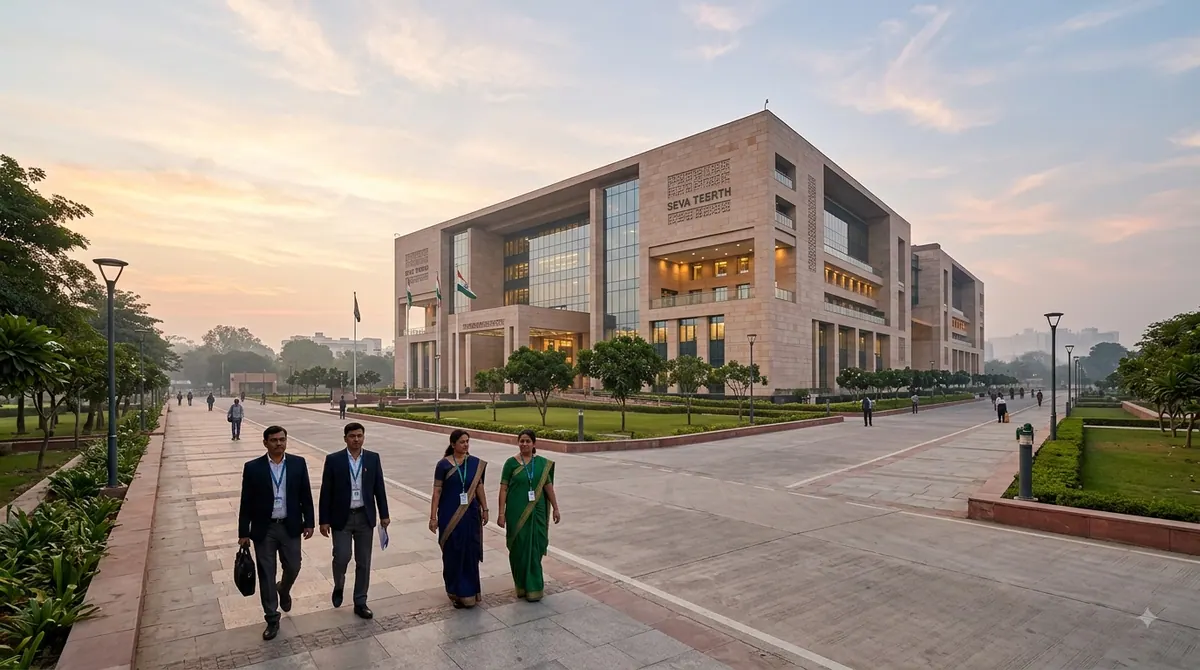
India’s Prime Minister’s Office has moved into a new administrative complex called Seva Teerth. But why was the move necessary, and what exactly happened to the historic South Block? Here’s the story behind one of India’s biggest government-office changes.
- Primary topic
- Seva Teerth
- Category
- Government Facts
- Reading time
- 3 minutes
- Last reviewed
- 2026-09-28
India’s PMO Has a New Address
For decades, some of India's most important government decisions were associated with the historic North Block and South Block buildings on Raisina Hill.
That changed in 2026.
The Prime Minister's Office, the Cabinet Secretariat and the National Security Council Secretariat are now housed in Seva Teerth, while several major ministries have moved into the new Kartavya Bhavan buildings. The new complex was formally inaugurated in February 2026.
But this isn't simply a story about government employees moving to a newer office.
There is a much bigger reason behind the change.
What Was South Block?
South Block is one of the most recognisable government buildings in New Delhi.
It has historically housed some of the most powerful offices in the Central Government, including the Prime Minister's Office and Ministry of Defence.
For generations, the building became almost synonymous with the machinery of India's central administration.
So why move?
Why Was a New Complex Needed?
The government described the new complex as part of an effort to create a more modern, efficient and citizen-centric administrative environment.
The idea is not simply to replace an old building with a new one.
Modern government administration requires infrastructure for:
- Digital systems
- Secure communications
- Large-scale coordination
- Modern office facilities
- Better integration between ministries
- Energy-efficient infrastructure
- Improved accessibility
The new complex was designed around these changing requirements.
What Exactly Is Seva Teerth?
Seva Teerth is the new complex that houses three particularly important institutions:
- Prime Minister's Office
- National Security Council Secretariat
- Cabinet Secretariat
That makes it one of the most important administrative locations in the country.
The name itself is significant.
“Seva” means service, while “Teerth” traditionally refers to a sacred or important place.
The government has presented the name as reflecting the idea of public service.
Then What Is Kartavya Bhavan?
Kartavya Bhavan is the adjoining government-office complex.
It houses several important ministries, including:
- Ministry of Finance
- Ministry of Defence
- Ministry of Health and Family Welfare
- Ministry of Education
and other government departments.
The idea is to bring multiple ministries into modern, purpose-built administrative facilities.
Is South Block Gone?
No.
This is where headlines can become misleading.
The historic government buildings themselves haven't simply disappeared.
The move is about changing where key government offices operate.
North Block and South Block have enormous historical and architectural importance, having been central to India's administrative system for decades.
Why Does This Matter to Ordinary People?
At first glance, this might sound like something that only matters to bureaucrats.
It doesn't.
Government buildings determine how departments work together, how secure information is handled and how public administration is organised.
If ministries dealing with finance, defence, health, education and other major sectors have modern infrastructure and better coordination, that can affect how government decisions are implemented.
Of course, a shiny new building by itself doesn't magically make administration better.
The real test is whether the infrastructure actually improves the way government works.
From Colonial Buildings to Modern Administration
The government has also framed the transition in symbolic terms.
At the inauguration, Prime Minister Narendra Modi described Seva Teerth and Kartavya Bhavan as part of an effort to move away from the colonial mindset associated with older administrative structures and towards citizen-centric governance.
Whether one agrees with that framing or not, the physical change is significant.
India's central administrative headquarters are entering a different architectural and technological era.
The Interesting Part
The most interesting thing about Seva Teerth isn't actually the building.
It is what the move represents.
For nearly a century, the image of Indian central administration was closely tied to the monumental government buildings of Raisina Hill.
Now, some of the country's most powerful administrative offices operate from a new complex designed for the demands of a digital-era government.
That is a pretty major shift.
Frequently asked questions
What Was South Block?
South Block is one of the most recognisable government buildings in New Delhi. It has historically housed some of the most powerful offices in the Central Government, including the Prime Minister's Office and Ministry of Defence. For generations, the building became almost synonymous with the machinery of India's central administration.
Why Was a New Complex Needed?
The government described the new complex as part of an effort to create a more modern, efficient and citizen-centric administrative environment. The idea is not simply to replace an old building with a new one. Modern government administration requires infrastructure for: Digital systemsSecure communicationsLarge-scale coordinationModern office facilitiesBetter integration between ministriesEnergy-efficient infrastru
What Exactly Is Seva Teerth?
Seva Teerth is the new complex that houses three particularly important institutions: Prime Minister's OfficeNational Security Council SecretariatCabinet Secretariat That makes it one of the most important administrative locations in the country. The name itself is significant. “Seva” means service, while “Teerth” traditionally refers to a sacred or important place. The government has presented the name as reflecting
Then What Is Kartavya Bhavan?
Kartavya Bhavan is the adjoining government-office complex. It houses several important ministries, including: Ministry of FinanceMinistry of DefenceMinistry of Health and Family WelfareMinistry of Education and other government departments. The idea is to bring multiple ministries into modern, purpose-built administrative facilities.
Is South Block Gone?
No. This is where headlines can become misleading. The historic government buildings themselves haven't simply disappeared. The move is about changing where key government offices operate. North Block and South Block have enormous historical and architectural importance, having been central to India's administrative system for decades.
Why Does This Matter to Ordinary People?
At first glance, this might sound like something that only matters to bureaucrats. It doesn't. Government buildings determine how departments work together, how secure information is handled and how public administration is organised. If ministries dealing with finance, defence, health, education and other major sectors have modern infrastructure and better coordination, that can affect how government decisions are i
Continue your preparation
Topics covered
About the author
Search Sarkari Naukri Team reviews government-job information, competitive-exam guidance and public-system explainers. Verify time-sensitive requirements on the relevant official authority's website.
Related articles
- Age Limit for Government Jobs 2026: Rules, Relaxation & How to Check — Government Job Guides
- Can Government Employees Start a YouTube Channel or Business? Rules Explained — Government Policies & Explained
- 10th and 12th Pass Government Jobs in India 2026: Best Career Options, Salary & How to Apply — Career Guide
- Bank Apprentice Jobs 2026: Graduate Apprentice Apply Guide — Government Job Guides
- Government Jobs Without Graduation 2026 – 10th & 12th Pass Jobs — Government Job Guides
- Group A, B, C & D Government Jobs Explained: Which One Is Right for You? — Career Guide